


Back
- Sciatica
- Chronic Low Back Pain (LBP)
If pain is travelling from your lower back into your leg, sciatica could be the reason.
If multiple Symptoms feel familiar, assessment helps
Sciatica happens when the sciatic nerve becomes irritated or compressed, causing pain, tingling, or numbness that can travel from your lower back down your leg.

Sciatic Nerve Compression
Pressure irritates the sciatic nerve

Radiating Leg Pain
Pain travels from the back to the leg

Muscle Weakness
Nerve irritation reduces muscle control

Limited Mobility
Walking and sitting become difficult
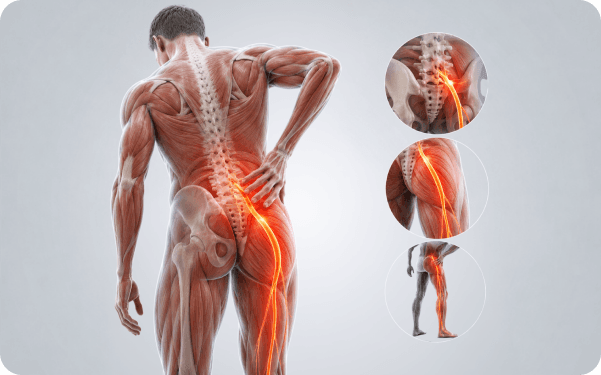
When the sciatic nerve is compressed or irritated, everyday movements can become painful and uncomfortable.
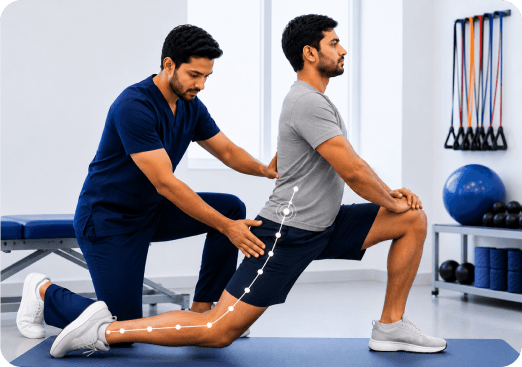
Your recovery plan is designed around your symptoms, lifestyle, and goals so you can move more comfortably every day.

We understand your pain, posture, movement, and how it affects your daily life.


Play Information
2.00 Min
Track how pain reduces and movement improves over time.
A structured, science-backed recovery journey designed to help you move from pain and limitation to strength, balance, and pain-free living.
You don't have to live with pain.
Book a session and begin moving more comfortably again.
Book an appointment
Answers to common questions about your recovery
Sciatica happens when the sciatic nerve becomes compressed or irritated, often by a herniated disc, spinal narrowing, or a tight piriformis muscle. This causes pain that can radiate from the lower back down through the hip and leg.
Yes. Physiotherapy for sciatica focuses on reducing nerve irritation, improving spinal alignment, releasing tight muscles, and restoring safe movement patterns so pain settles and mobility returns without surgery.
Mild sciatica often improves within 4–6 weeks with guided physiotherapy and activity modification. More persistent cases linked to disc or nerve involvement may need a longer, progressive rehabilitation plan.
Most sciatica cases resolve with conservative care. Structured physiotherapy relieves nerve pressure, strengthens supporting muscles, and corrects movement habits, helping the majority of people recover without surgery.
Nerve mobility exercises, gentle core and glute strengthening, and controlled mobility drills help ease sciatica. Your physiotherapist tailors and progresses these safely based on your symptoms and cause.
Yes. Virtual physiotherapy works well for many sciatica cases through guided exercises, posture correction, and progress tracking, helping you reduce nerve pain and restore movement safely from home.