



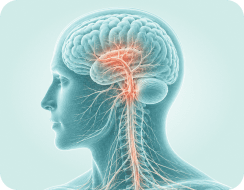
Stroke / Paralysis
- Stroke / CVA (Cerebrovascular Accident)
- Hemiplegia / Hemiparesis
Facial palsy often develops suddenly and can affect one side of the face.
If multiple Symptoms feel familiar, assessment helps
Bell's Palsy occurs when the facial nerve becomes inflamed, interrupting signals between the brain and facial muscles.

Facial Nerve Inflammation
Swelling compresses the facial nerve.

Muscle Weakness
Facial muscles lose active movement.

Reduced Facial Control
Smiling, blinking, and speaking become difficult.

Recovery & Re-education
Therapy helps retrain muscles and improve coordination.
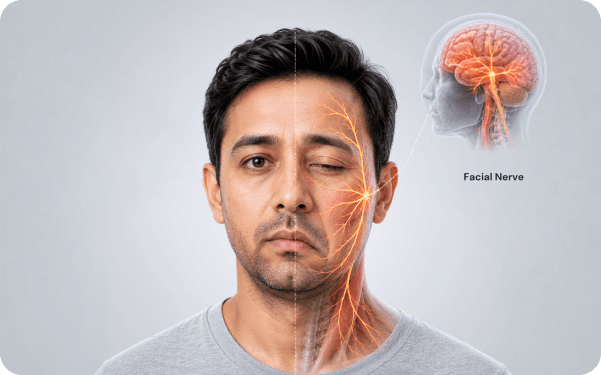
Although the exact cause isn't always known, inflammation of the facial nerve is the most common reason.

Recovery is focused on restoring facial movement, improving symmetry, and preventing long-term muscle tightness.

Evaluate facial muscle strength, nerve function, eye closure, and facial symmetry.


Play Information
2.00 Min
Recovery varies from person to person, but consistent therapy supports better outcomes.
A structured, science-backed recovery journey designed to help you move from pain and limitation to strength, balance, and pain-free living.

You don't have to live with pain.
Book a session and begin moving more comfortably again.
Book an appointment
Answers to common questions about your recovery
Many people begin to improve within a few weeks, though complete recovery may take several months depending on the severity and how early rehabilitation begins. Consistent facial therapy supports faster, more balanced recovery.
Yes. Facial physiotherapy uses guided exercises, muscle re-education, and eye-protection strategies to restore movement, improve symmetry, and prevent long-term muscle tightness.
The earlier the better. Starting soon after diagnosis helps protect the eye, reduce complications, and retrain facial muscles before stiffness or abnormal movement patterns develop.
Most people regain natural facial expression and a symmetrical smile with consistent rehabilitation. Recovery depends on the severity of the nerve involvement, but meaningful improvement is common.
In most cases Bell's Palsy is temporary and improves over time. Structured physiotherapy helps maximize recovery and reduce the risk of lingering weakness or tightness.