



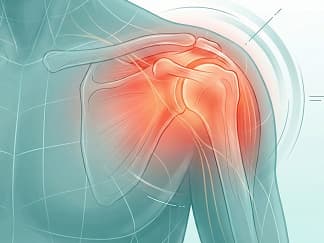
Shoulder
- Frozen Shoulder (Adhesive Capsulitis)
- Rotator Cuff Tear
Elbow pain often starts gradually and can quickly affect work, workouts, and everyday tasks.
If multiple Symptoms feel familiar, assessment helps
Elbow pain usually involves irritated tendons and muscles rather than the joint alone.

Muscle Imbalance
Overworked muscles fatigue faster than they recover

Tendon Overload
Repetitive strain irritates forearm tendons

Reduced Load Tolerance
Tendons lose capacity to handle daily stress

Movement Compensation
Wrist and shoulder mechanics add extra strain to the elbow
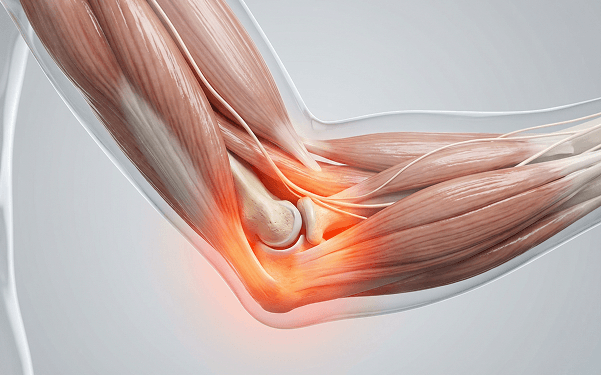
Elbow pain is commonly linked to repeated use and poor load management.
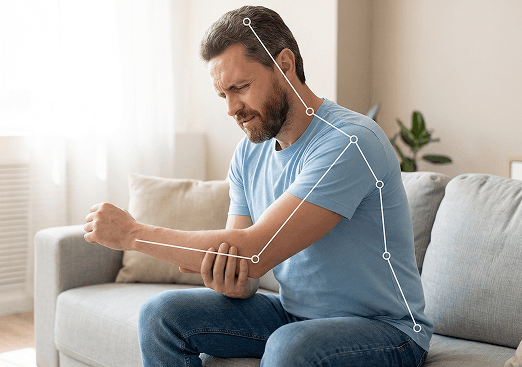
Recovery isn't instant. It unfolds through understanding, guided movement, and steady progress.

We assess movement patterns, workload, and daily activities to find the true source of strain.


Play Information
2.00 Min
See how pain reduces and function improves over time.
A structured, science-backed recovery journey designed to help you move from pain and limitation to strength, balance, and pain-free living.
You don't have to live with pain.
Book a session and begin moving more comfortably again.
Book an appointment
Answers to common questions about your recovery
Elbow pain is commonly caused by repetitive gripping, lifting, typing, gym training, or sports activities like tennis and badminton. It may involve tendon irritation, muscle strain, or conditions such as tennis elbow or golfer's elbow.
Tennis elbow (lateral epicondylitis) is a condition where repetitive wrist and forearm movements irritate the outer elbow tendons. Physiotherapy for tennis elbow reduces inflammation, restores strength, and improves forearm control to prevent recurrence.
Yes. Physiotherapy is one of the most effective treatments for elbow pain. It focuses on reducing tendon irritation, improving load tolerance, strengthening forearm muscles, and correcting movement patterns that cause strain.
Mild elbow pain may improve within 2–4 weeks. Chronic conditions like tennis elbow may require structured rehabilitation over several weeks. Early physiotherapy significantly improves recovery time.
Yes. Virtual physiotherapy works well for repetitive strain injuries, early-stage tennis elbow, and posture-related elbow pain. Guided exercises and activity modification help manage pain and restore function safely.
You should consult a physiotherapist if elbow pain persists for more than a few days, worsens with gripping or lifting, causes weakness in the hand, or limits daily activities. Early treatment prevents long-term tendon damage.