


Neck
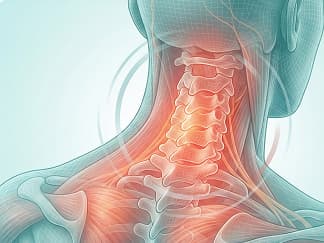
- Cervical Spondylosis
- Text Neck
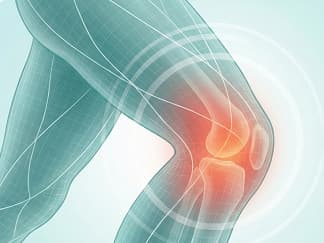
If your knees have started feeling stiff or painful during everyday activities, you're not alone. These are some common signs of knee osteoarthritis.
If multiple Symptoms feel familiar, assessment helps
As we age, the natural cushioning in the knee can gradually wear down. This can make everyday movements feel stiff, uncomfortable, or even painful.

Cartilage Wear
Joint cushioning gradually wears away.

Joint Stiffness
The knee becomes less flexible.

Pain & Inflammation
Movement causes pain and swelling.

Reduced Mobility
Walking and daily activities become difficult.
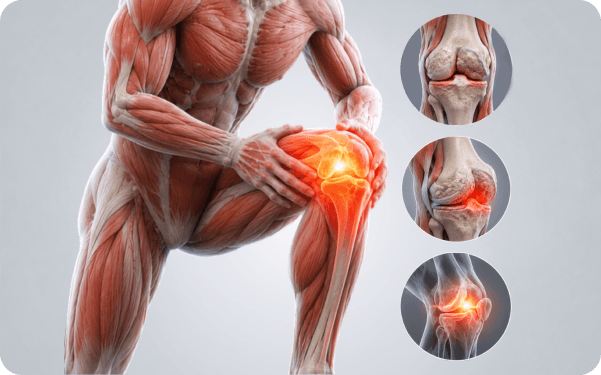
As the knee changes over time, everyday movements can become more challenging without the right support.
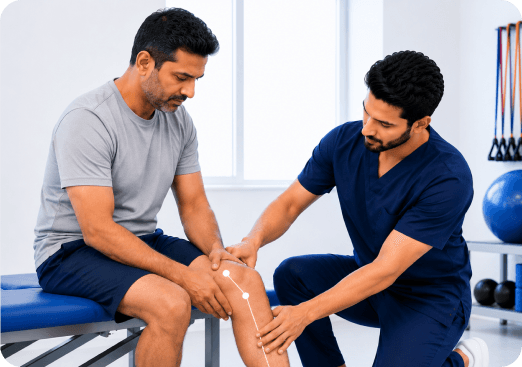
No two knees are the same. Your recovery plan is designed around your pain, lifestyle, movement goals, and the activities that matter most to you.

We understand how your knee moves, where it hurts, and how it affects your daily life.


Play Information
2.00 Min
Consistent physiotherapy helps improve knee strength, flexibility, and everyday mobility.
A structured, science-backed recovery journey designed to help you move from pain and limitation to strength, balance, and pain-free living.
You don't have to live with pain.
Book a session and begin moving more comfortably again.
Book an appointment
Answers to common questions about your recovery
Yes. Physiotherapy reduces knee pain, improves joint mobility, and strengthens the muscles that support the knee. Stronger quadriceps and glutes share load through the joint, so walking, stairs, and standing become more comfortable.
Most cases are managed well without surgery. Guided exercise, weight and activity management, and hands-on therapy relieve symptoms and slow progression. Knee replacement is considered only when pain and function no longer respond to conservative care.
Quadriceps and glute strengthening, gentle range-of-motion work, and low-impact activity such as stationary cycling or walking suit most knees. Your physiotherapist selects and progresses these based on your pain and current strength.
Early relief is often felt within 2–4 weeks. A complete rehabilitation programme usually runs 6–12 weeks depending on the degree of joint wear, your activity level, and how consistently exercises are followed.
Yes. Hands-on therapy, mobility work, and targeted strengthening reduce stiffness and muscle guarding around the knee, restoring smoother and less painful movement over time.
Yes. Virtual physiotherapy works well for most knee arthritis cases through guided exercise progression, activity and load advice, and regular symptom tracking, helping you recover safely from home.