
Cerebral Palsy in Kids: What Parents Should Know, and How Physiotherapy Helps
By Dr. Asma Multani, Physiotherapist, Vyana Care
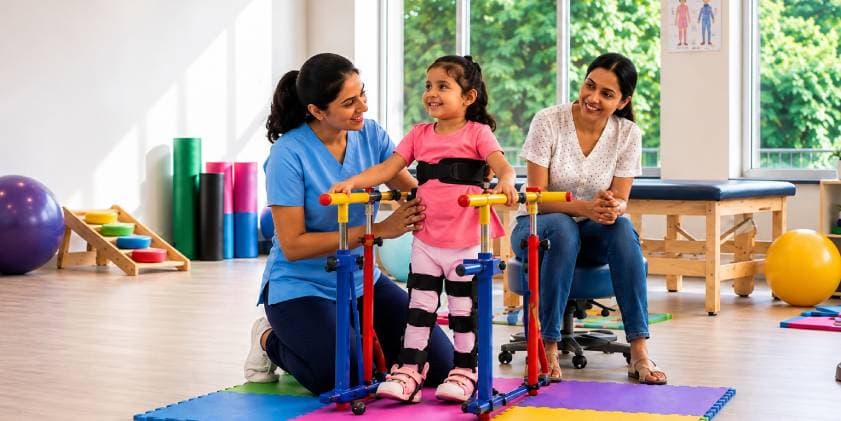
Nobody wants to hear the words "cerebral palsy" about their own child. And yet for most parents, it isn't really a shock. You'd probably already noticed something long before any doctor said it out loud: a leg that stayed stiff, a crawl that never quite took off. Small things you told yourself weren't worth worrying about. Until, one day, you couldn't tell yourself that anymore.
If that's where you're at, take a second. Breathe. None of this is something you caused. And you're not walking this alone. Plenty of parents have stood exactly where you're standing. Here's the thing, though: kids with cerebral palsy really can grow, learn, and thrive, especially when help starts early. So let's get into it: what causes this, the signs worth knowing, how it's treated, and what physiotherapy looks like day to day.
What Actually Causes Cerebral Palsy?
Cerebral palsy comes from an injury to, or a problem in, the part of the brain that controls movement. It might happen before birth, during a tough delivery, or sometime in the first few weeks of life. Low oxygen at birth. An infection during pregnancy. Being born too early. A genetic factor. Doctors point to all of these as possible causes, and the CDC's overview of cerebral palsy lists much the same range. Often, though, there's no clear answer at all, and that's more common than most people assume. It doesn't mean you or your doctor missed anything.
What should you watch for? Stiffness that doesn't ease up, or on the flip side, muscles that feel almost too loose. Maybe your baby's slower to sit up, crawl, or walk than you'd expect. Or they seem to favour one hand a lot more than the other. Balance that seems a bit off. Trouble picking up small objects. Feeding difficulties, or speech that's slow to develop. Any one of these on its own usually isn't a big deal. But a few of them together, lasting for weeks, are worth getting checked.
Why These Signs Often Get Missed
Every baby grows differently, and that's exactly the problem. It makes these signs easy to miss. A stiff leg gets put down to "just her way of moving." A late crawler gets called lazy or laid-back. Nobody's overlooking things on purpose. Day to day, nothing looks urgent. Only after weeks or months does the pattern really stand out. Which is exactly why regular check-ups matter, even if your baby seems totally fine to you.
Why "Wait and See" Doesn't Work Here
Cerebral palsy won't resolve on its own with time. But there's real hope in how young brains work, thanks to something called neuroplasticity. Start early, and a young brain can genuinely pick up new, better ways to move. Wait too long instead, and the body tends to settle into old patterns. Stiff muscles. Awkward habits. The kind of thing that takes real work to undo later.
“Parents come in asking whether their child will walk. The better question, and the one we work on from day one, is what this child can do next week that they couldn't do last week.”
What Physiotherapy Actually Involves
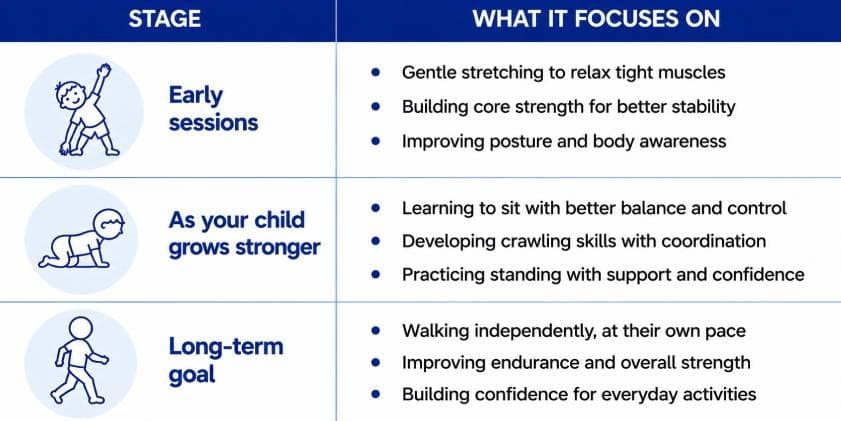
A good physiotherapist won't just hand you a sheet of exercises and send you off. They spend real time observing your child first: how they sit, how tight or loose their muscles are, how they move through an ordinary day. From there, they build a plan around that specific child, not one copied from someone else's file. Early sessions tend to be gentle, focused on stretching and building core strength. As your child gets stronger, the goals grow too: sitting independently, crawling, standing, and for many children, eventually walking, each at their own pace.
What Progress Actually Looks Like
There's rarely one big breakthrough moment. Progress here is usually quieter than that. Maybe your baby holds their head up a little longer this week than last. Maybe a toddler finally grabs a toy that used to sit just out of reach. Nobody's promising every issue disappears. But how much your child can do, and how much easier it feels for them, that's what shifts over time. If you're wondering about timelines, it's worth reading how long physiotherapy usually takes to work.
Simple Ways to Support Movement at Home
You can do plenty at home too. Just make sure it matches what your therapist has actually told you to do. Tummy time works well for building up neck and core strength. Try putting a favourite toy just out of reach. Chances are, your child will stretch or roll to get it. And whatever stretches your therapist showed you last visit, keep practising them through the week.
One thing matters more than anything else: stick to your therapist's plan, not exercises from some random video online. If a movement seems to hurt or upset your child, stop. Check with your therapist before trying it again.
When to See a Specialist
If your child seems clearly behind on milestones, get them checked. Same goes if their muscles stay stiff or floppy with no real change, or if feeding, swallowing, or speech are still a struggle month after month.
A shorter list of signs means don't wait for the next routine visit. Go now:
- Losing a skill they already had
- Seizures
- Sudden jerking movements that don't fit the moment
- Distress that won't settle
- Pain that's clearly beyond normal fussiness
These situations are rare. But if any of that happens, get your child seen right away. Don't wait for next week.
Does Cerebral Palsy Get Worse Over Time?
No, it doesn't. This is a common fear, and an understandable one, but it's not how cerebral palsy works. It comes from a one-time issue in how the brain developed, not an ongoing disease that spreads or worsens. So the underlying brain condition itself doesn't change. What can change is how it shows up physically as your child grows, which is why therapy plans get reviewed and adjusted regularly, rather than staying fixed forever.
The Vyana Approach
At Vyana, we're not aiming for one good session and calling it done. We focus on steady, sustained progress: physiotherapy plans that evolve as your child grows, along with guidance families can actually use at home. That's the same movement-first thinking we bring to every patient. If you'd like to talk through what's going on with your child, our paediatric physiotherapists are here to help.