
Ice or Heat for Pain? How to Pick the Right One
By Dr. Asma Multani, Physiotherapist, Vyana Care
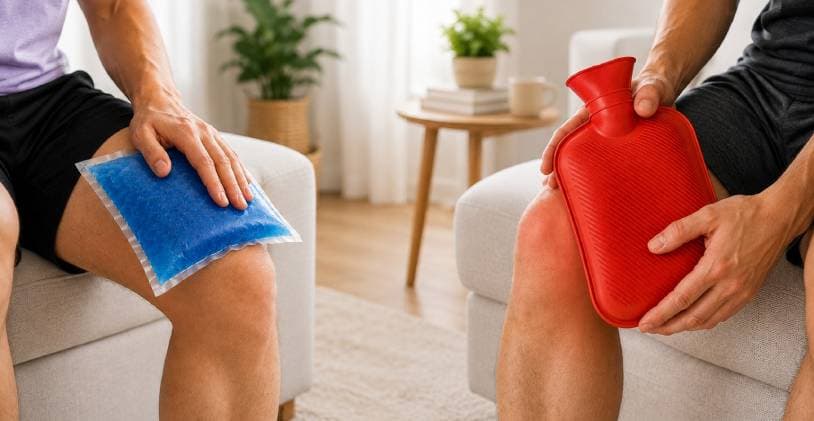
Ice pack in one hand, heating pack in the other. Which one do you actually grab? Most people freeze at this point, no pun intended. The short answer is simple: ice suits a fresh injury with swelling, heat suits muscles that have been tight or sore for a while.
But that's not a rule you can follow with your eyes closed. It really depends on what's causing the pain. So let's go through both properly, when each one is worth using, and when it's time to stop guessing and just get it checked.
Why This Question Never Really Goes Away
Truth is, both heat and ice ease pain, just in different ways. That's really where the mix-up starts. And if you grab the wrong one, nothing bad happens, you're just sitting there with a cold pack that isn't really doing anything. Most people never actually learn why one works over the other, they just do what they were told once and stick with it.
Take a twisted ankle. Someone tells you to ice it, and it helps. Then a few days go by, and the same ankle feels stiff instead of swollen, so ice stops being the answer and heat is what settles it. Meanwhile you've got a coworker who reaches for heat no matter what, and a mum who's convinced ice fixes everything, and somewhere in the middle of all that advice, most people just guess.
Ice: How It Works and When to Use It
Cold makes your blood vessels tighten up, doctors call it vasoconstriction. That means less blood flows to the area, which keeps swelling down. It also numbs things a little, so the pain feels duller. This is why ice works best right after you get hurt, not once the injury's already a few days old.
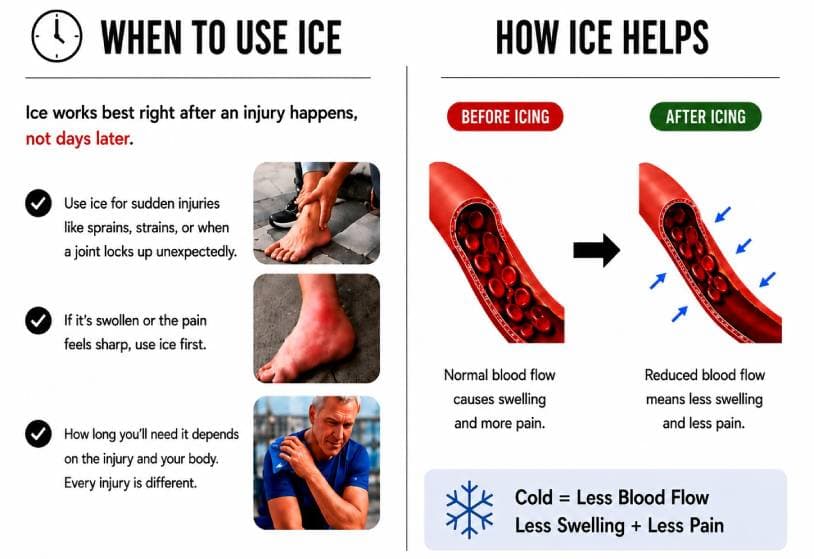
There's no fixed number of days you're supposed to ice something for, it depends on what happened. NHS: Sprains and strains suggests up to 20 minutes at a time, with the pack wrapped rather than straight on the skin. Twist your ankle stepping off a curb, or feel a joint suddenly lock up, and if it swells up or the pain's sharp, reach for ice first. Don't overthink the exact minutes or days, just go by how the area looks and feels, since that changes from person to person.
Reach for ice if:
- Pain started suddenly, after a fall, a twist, or a knock
- There's visible swelling, redness, or warmth around a joint
- Pain feels sharp or throbbing in the first day or two
How to ice it right:
- 15-20 minutes at a time is plenty
- Always put a towel between the ice and your skin
- Stop right away if the area goes numb, turns bright red, or starts hurting more
Heat: How It Works and When to Use It
Heat works the opposite way. It widens your blood vessels so more blood gets through, and that extra blood flow is what loosens up a tight, tense muscle. It's the better option once pain has built up slowly over days or weeks, rather than something that just happened.
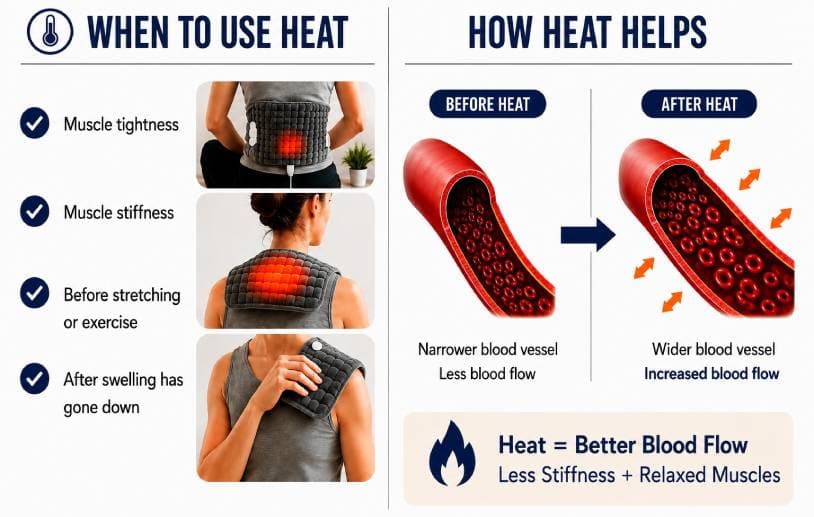
A stiff neck that's dragged on all week, a lower back that's sore from a desk job, knees that click when you stand up, heat tends to help with all of these. It's also common before a workout, since warm muscles just move easier than cold, stiff ones.
Reach for heat if:
- Muscles feel tight or knotted, with nothing actually injured
- There's stiffness in the morning, or after sitting too long
- You're warming up before stretching or exercise
How to heat it right:
- 15-20 minutes at a time is plenty
- Warm is enough, it doesn't need to be hot, and take breaks rather than leaving it on nonstop
- Don't fall asleep with it on, that's usually how burns happen
What If You Genuinely Can't Tell?
Plenty of pain doesn't fit neatly into “just happened” or “been going on for months,” and that's when picking between heat and ice gets confusing. Arthritis is a good example, some days heat feels better, other days it's ice, and it just depends what's bothering you most right then, the pain, the stiffness, or the swelling.
Honestly, you're unlikely to make things worse either way, so there's no huge risk in trying one and switching if it doesn't help. The thing to watch for is leaning on it for weeks without figuring out why it keeps flaring up. At that point it's worth getting a physiotherapist to look past the symptom and find the actual cause, and it's usually quicker to turn around than people expect.
A Word of Caution
Heat and ice are safe for most people, most of the time. But there are a few situations where it's better to hold off on both rather than push through and hope for the best.
| Situation | What to do |
|---|---|
| Numbness or bad circulation in the area | Skip both heat and ice |
| Skin that's swollen, broken, or already irritated | Leave heat out of it |
| Pain that's severe or getting worse | See a doctor or physiotherapist |
| Big swelling, a joint out of place, or trouble bearing weight | Get it checked, don't handle at home |
| Numbness or weakness alongside pain | Always worth having looked at |
When Should You See a Physiotherapist?
If pain's still hanging around after a few days, or it's stopping you from moving the way you normally would, that's your sign to get it looked at. Most people put it off way longer than they should, when getting it checked early would've saved them the hassle.
Seek help quickly if you notice:
- Numbness, tingling, or weakness in a limb
- Trouble with balance, walking, or coordination
- Loss of bladder or bowel control
- A fever, unexplained weight loss, or just feeling off
- Severe pain that doesn't let up no matter what position you're in
The Vyana Approach
At Vyana Physiotherapy we could just hand you a heat pack and send you on your way, but that's not really the point. We'd rather work out what's actually going on, put together something that fits your life, and get you moving properly again so this doesn't just come back in a month.
It's grounded in real evidence, not a one-size-fits-all sheet of exercises. We try to keep it practical enough that you'll actually stick with it, because a plan you abandon in a week doesn't help anyone.