
Online Physiotherapy vs In-Clinic Physiotherapy: Which One Actually Fits Your Life?
By Dr. Asma Multani, Physiotherapist, Vyana Care
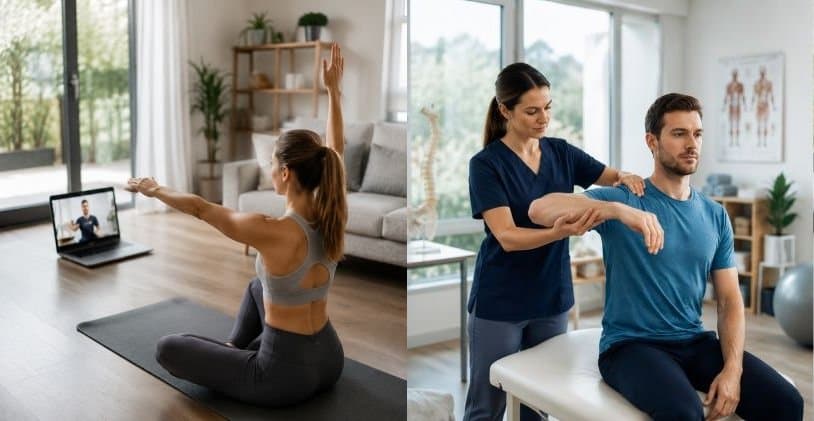
People ask us this almost every week. Do I really need to go to a clinic for this? And if physio can be done from home, why bother going in person at all?
Good question. Really it comes down to what your body needs right now. Not whichever option sounds easier.
Pain doesn't live in a bubble. It shows up around work, traffic, kids, screens, whatever else is going on that day. Care that ignores all that just feels off, even when it means well.
At Vyana we do both online and in-clinic physio. So we're not trying to push you toward one over the other. We just want to help you figure out what you actually need right now.
Why Physiotherapy Had to Change
Physio used to mean a clinic. Full stop. You'd travel there, wait, get treated, then go home with a sheet of exercises for next time. That worked fine back when life was slower.
Not anymore. People work from desks, couches, kitchen tables. Pain shows up in the middle of a meeting, on a long drive, at the end of a day when you're wiped out.
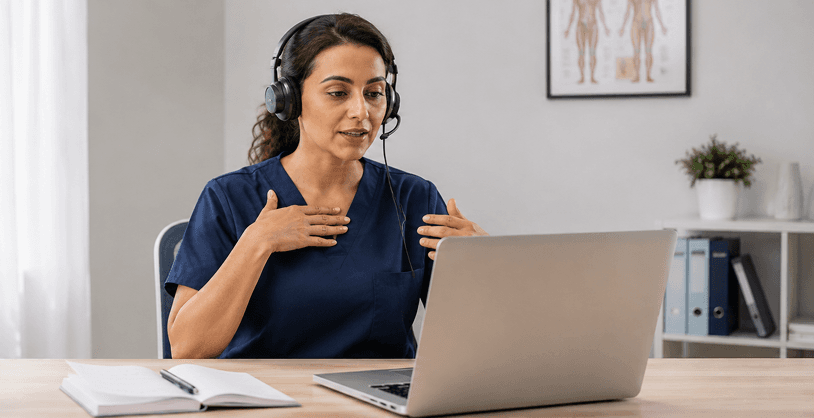
Clinics didn't break. Life around them changed.
Online physio grew out of that. Not a shortcut. Just a way to meet people where they actually are.
What In-Clinic Physiotherapy Still Does Really Well
Let's start here. In-clinic physio still matters. For a lot of people, it's exactly where things should start.

You get hands-on checks. Manual therapy if it helps. A safe space to start moving again without guessing. If your pain feels unpredictable, having someone right there watching you move brings a kind of comfort you can't really get any other way.
The World Health Organization fact sheet on musculoskeletal conditions says supervised rehab plays a big role in treating muscle and joint problems and helping people move safely again.
Clinic care usually matters most early on:
- Bad pain that hit suddenly.
- Movement that feels unsafe.
- Fear of using your body again.
- Recovery right after surgery.
At Vyana, we use clinic time to build your confidence, not keep you coming back forever.
Where Clinic-Only Care Falls Short
Here's the catch. A clinic is a small part of your week.
Your pain doesn't stay at the clinic door.
Your posture doesn't only slip during appointments.
Stress doesn't wait for your next session.
Pain lives wherever you live.
A lot happens between visits that nobody actually sees. Sessions are short. Your real desk, your real bed, your real habits, nobody's watching those. You just talk about them instead. And the gap between visits can stretch longer than you'd like.
That doesn't make clinic care bad. It just means, on its own, it's often not enough for the pain most people carry around today.
What Online Physiotherapy Actually Looks Like
People get the wrong idea about online physio a lot. It's not a stack of generic workout videos. It's not one plan for everyone. And it was never meant to replace a real diagnosis.
Done right, it's live. It's built around you. The American Physical Therapy Association says telehealth works well for physio, as long as it includes real assessment, real progress checks, and real feedback.
At Vyana, that means:
- Watching how you move in real time.
- Fixing your posture as it happens.
- Changing your plan as you improve.
- Teaching you along the way instead of just handing over exercises.
Care shows up where your pain actually lives. Which is rarely a clinic.
What the Research Actually Says
Online physio isn't some new experiment anymore. There's real proof behind it.
A review in the Journal of Medical Internet Research found online rehab gets results just as good as in-person physio for a lot of muscle and joint problems. Another study in the Physical Therapy Journal found people stick with rehab longer, and get better results, when it fits into their actual day instead of sitting outside it.
Makes sense. Pain doesn't get fixed by one or two sessions a week. It's shaped by everything else, on all the other days, when nobody's watching.
Where Online Physiotherapy Tends to Work Best
Online care works best for things tied to how you move every day, not things that need hands-on treatment:
- Chronic neck, back, and shoulder pain.
- Posture problems, including the kind that no amount of sitting straight ever fixes.
- Pain from sitting at a desk all day.
- General mobility work.
- Keeping pain from coming back once the worst part is over.
A physio can watch you at your real desk, fix your movement in your real home, and catch problems the second they show up. If something's not working, the plan changes fast.
“Your pain doesn't take breaks between sessions. Your care shouldn't either.”
Where In-Clinic Physiotherapy Still Matters Most
We'll be straight here too. In-clinic care still matters most:
- When pain is bad or came out of nowhere.
- When you really need a hands-on check first.
- When you're just out of surgery.
- When there are nerve symptoms involved.
- When you just don't trust your body to move right now.
At Vyana, we use clinic care on purpose. Not forever. The goal is getting you to a place where you don't need it as much, which is often how recovery from long-running neck pain ends up playing out.
Why Vyana Doesn't Make You Pick One
This is where we do things a bit differently. We don't treat online and in-clinic like rivals. They're just tools. Different bodies need different tools at different times.
A lot of people start in the clinic, build some confidence, then move online once things feel steadier. Others start online and only come in when something specific comes up.
That flexibility is on purpose. Recovery was never a straight line anyway.
Your care should bend around your body, not the other way round.
Consistency Beats Intensity
Here's a myth worth killing. More intense care doesn't mean faster recovery. Usually it's the opposite. Steady movement over time beats a few hard sessions squeezed in whenever you can manage it.
Online physio makes that kind of steady routine easier to actually stick to. Fewer missed sessions. No travel eating into your day. It's easier to fit movement into your routine when a session doesn't need a whole trip planned around it. And your plan can shift fast if something's off.
Sticking with it is really what builds trust in your own body, and that trust is a big part of what brings pain down.
Your Nervous System Notices Where You Are
Pain isn't just physical. It's also about your nervous system, and that reacts differently depending on where you are.
Harvard Health says familiar places tend to lower stress and help people feel more confident moving. That's probably why people move more freely at home than they ever do at a clinic. Online care meets your body where it already feels safe. Turns out that matters more than most people think.
What People Usually Realise Once They've Tried Both
We hear versions of this a lot at Vyana.
“I didn't realise how much my daily habits were doing this to me.”
“I finally saw how badly I actually sit at my desk.”
“This just felt like care that fit into my life for once.”
You rarely get that kind of insight from clinic visits alone. Mostly because nobody's watching your actual day happen.
How Vyana Builds Online Care
Online physio at Vyana isn't something you just follow on your own.
- Sessions are live, not recorded.
- Your plan keeps moving instead of sitting still for weeks.
- You're taught things along the way, not left to guess.
- There's always a real person guiding you, not an app running quietly in the background.
You're never left wondering what's next.
How to Figure Out What's Right for You
Start by asking yourself:
- Where does your pain show up most?
- Do you need someone in the room to feel okay right now?
- Or can you move safely with guidance from a distance?
- Do you need flexibility more than you need to be somewhere in person?
There's no single right answer.
Just the right answer for your body, right now.
The Vyana Approach
At Vyana, the format was never really the point. The result is. Whether you work with us online or in person, the care is personal to you, focused on movement, and led by a real person the whole way through.
Pain relief is just the start.
Trusting your body again is the real goal.