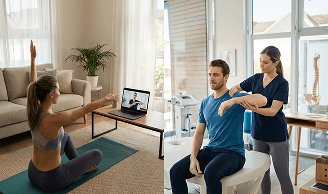
Posture Pain and Correction: Why Sitting Straight Isn't the Fix, and How Physiotherapy Helps
By Dr. Sakshi Bhatia, Physiotherapist, Vyana Care

Most of us heard this growing up. Sit up straight. Shoulders back. Don't slouch. It sounded like good advice.
But years later, you're still doing the same thing. You shift in your chair. Your neck hurts by evening. You feel stiff even when you try to sit "right." If trying harder was the answer, it would have worked by now.
Most people who come to Vyana realize the same thing. They didn't fail. The advice just didn't work.
What Causes Poor Posture?
We treat posture like a pose. Something you hold in place. But your body isn't made for that.
Try sitting straight for ten minutes without moving. After a few minutes, your breathing changes. Your shoulders go up. Your lower back starts to hurt.
This doesn't mean you're sitting wrong. It means your body wants to move. Doctors have said for years that staying still too long causes most desk job pain. The World Health Organization fact sheet on musculoskeletal conditions says the same thing. The real problem isn't how you sit. It's that you don't move enough.
Posture isn't something you hold still.
It's supposed to change all day long, just like the rest of your body.
Why Has Poor Posture Become So Common?
Screens are a big part of it. Phones, laptops, long meetings. All of it pulls your head forward and rounds your shoulders for hours. Your neck and back end up working overtime, and they get tired.
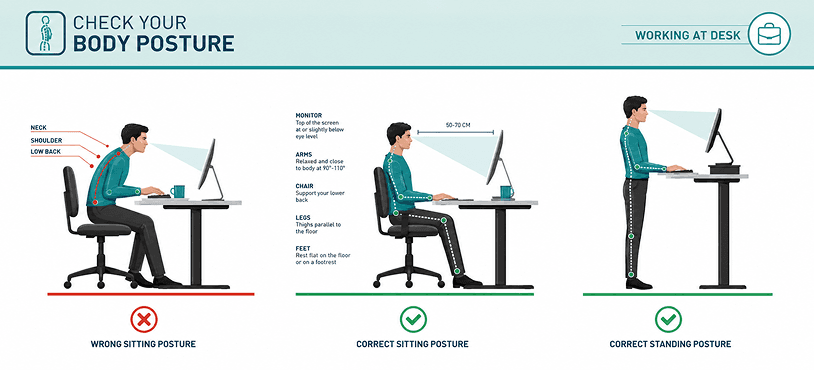
It's usually not one big thing. It's small habits adding up. Sitting too long. Scrolling in bed. Slouching on video calls. None of it seems like much in one day. But do it for weeks and your body shows it. Forward head. Rounded shoulders. Tight hips. A sore lower back. This is also where most desk-related neck pain starts.
This isn't your body failing. It's just adjusting to what you do most.
Why Quick Fixes Often Don't Last
Posture braces and phone alarms sound helpful. But they don't make your muscles stronger. They just push your body into a shape it can't hold on its own.
So when you take the brace off, or the alarm stops, you go back to how you sat before. That's not laziness. Your body just isn't strong enough yet to hold that position.
How Physiotherapy Treats Posture
A good physiotherapist doesn't just tell you to sit differently. They watch how you move. How you stand up. How you walk. Where you feel stiff.
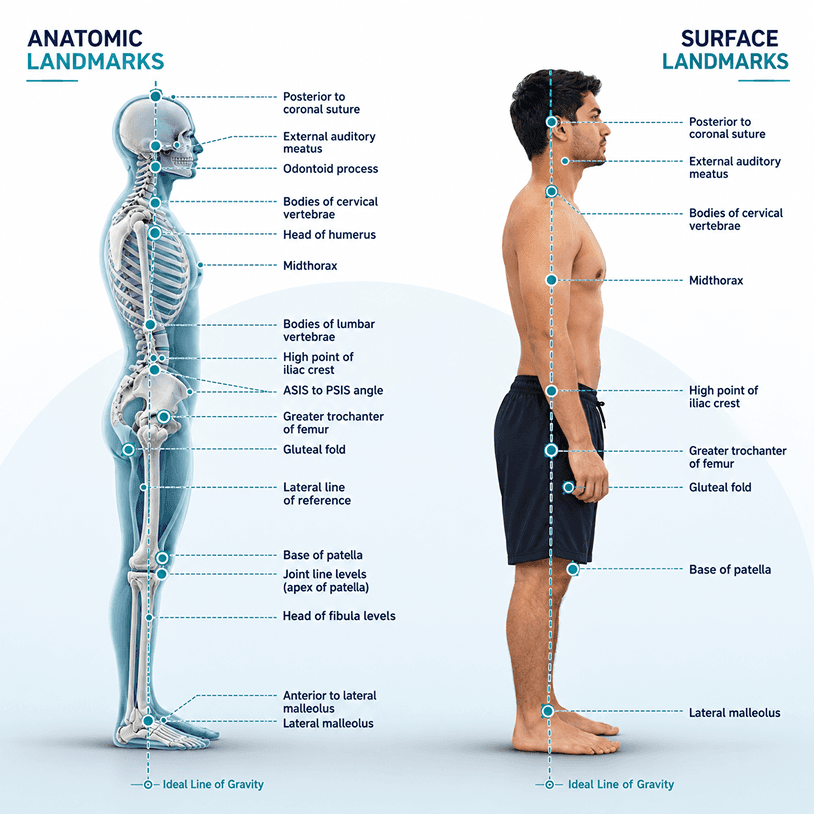
At Vyana, we start the same way, with movement, not posture. Most posture problems come from a part of the body that has stopped moving well. The upper back gets stiff. The hips lose movement. The neck then works harder to make up for it.
So we work on movement first, especially in the upper back and hips. You can't sit well if your spine can't move.
Once movement comes back, we build strength. Not tight, forced strength. The kind that turns on when you need it and turns off when you don't. We build this through real movement, not through holding poses in a clinic.
What Change Actually Feels Like
Nobody wakes up with perfect posture overnight. It happens slowly. Quietly. Your shoulders feel looser by afternoon. You sit comfortably without trying. A whole day passes and you notice your back didn't hurt at all.
None of it feels big at the time. But it adds up. Your body stops holding so much tension because it found easier ways to support you.
Simple Movements for Better Posture
A few small movements can help. Nothing hard. Nothing that should hurt.
- Stand in a doorway. Lean forward a little with your arms out. Feel a stretch in your chest.
- Sit and twist your upper body slowly side to side.
- Squeeze your shoulder blades together for a few seconds.
- If you sit at a desk, stand up and walk for a minute every half hour.
“If something feels sharp, or the pain moves into your arm, stop. Get it checked by a physiotherapist.”
When Should You See a Physiotherapist?
See someone if the pain lasts more than a few weeks. Or if it keeps coming back. Or if it affects your work or sleep. Getting help early saves you months of trouble later.
Get checked right away if you notice any of these:
- Pain that starts after a fall.
- Numbness, tingling, or weakness in your arm or hand.
- Trouble with balance.
- Loss of bladder or bowel control.
- Fever or weight loss you can't explain.
- Pain that won't go away no matter what you try.
These are rare. But it's still worth checking. A physiotherapist can rule them out quickly.
Can Stress Make Posture Worse?
Yes, more than most people think. Posture isn't just about muscles and joints. Your nervous system plays a part too. When you're stressed, your muscles tighten without you noticing. This changes how your body holds itself.
That's why posture feels worse during a hard week, even if you haven't changed how you sit. Managing stress is part of fixing posture. It's not separate from it.
The Vyana Approach
At Vyana, we don't just want you to feel better today. We want you to move easily. Stand taller without thinking about it. Trust your body again instead of forcing a position.
That means real physiotherapy, a plan made for your body, and habits simple enough to keep doing months later.