Sports Injury Rehabilitation: Getting Back to Your Sport Without Re-Injuring Yourself
By Dr. Asma Multani, Physiotherapist, Vyana Care
A twisted ankle might stop hurting in a week. That does not mean it is ready for a run or a quick turn. Many athletes make this mistake. The pain goes away so they think they are healed. They return quickly. Then they get hurt again. It is often worse this time. Sports injury rehabilitation is about closing that gap. It is about not making guesses based on how you feel on any given day. It is about actually checking if your body is able to handle your sport.
This gap between "pain-free" and "sport-ready" is where most repeat injuries happen. It is not because athletes are careless. It is because pain is a signal to read and readiness is not. Pain tells you something is wrong. It does not tell you when everything is right again. That is the reason a proper rehabilitation process exists in the first place.
What Sports Injury Rehabilitation Actually Means
Rehabilitation is not about moving without pain. It is about getting your body to do what your sport requires. These are two different things. Your knee may feel fine on the stairs. It can still give way when you land from a jump. Jumping demands strength and control more than walking up stairs.
A physiotherapist's job is to test, not to guess. They look at how the injured side compares to the uninjured side. They check your strength. They watch your movement. Whether you move to the next stage depends on this, not on how you feel that morning. Good physiotherapy for athletes works this way, step by step, based on progress.
This is also why two athletes with the same injury can end up on very different timelines. A good rehab plan follows the body, not the calendar.
Why Athletes Get Hurt Again After Recovery
There are reasons for this. The muscles around the injury can stay weak even after the pain is gone. Confidence often returns faster than actual strength does. A lot of people just skip the strengthening exercises because they feel slow and boring compared to getting back to matches.
None of this feels risky at the time. It adds up. You end up with a joint that looks fine but is not strong enough for competition. That usually appears in a match, not in easy training.
There is another piece of this that gets overlooked. When one area is injured the body quietly starts relying on other muscles to make up for it. A sore knee might get supported by the hip. The lower back works harder than usual. Once the knee feels better those compensation patterns do not always switch off on their own. That is part of why a "recovered" athlete can feel slightly off during fast movement even when every test looks normal.
“Coaches have used my "RICE" guideline for decades, but now it appears that both ice and complete rest may delay healing, instead of helping.”
That shift in thinking is now built into how return to sport is handled worldwide. The British Journal of Sports Medicine: 2016 Bern consensus statement on return to sport describes return to sport as a staged decision based on tested criteria, not a single moment when someone is declared fit.
The Stages of Recovery
Recovery from a sports injury usually goes through four stages.
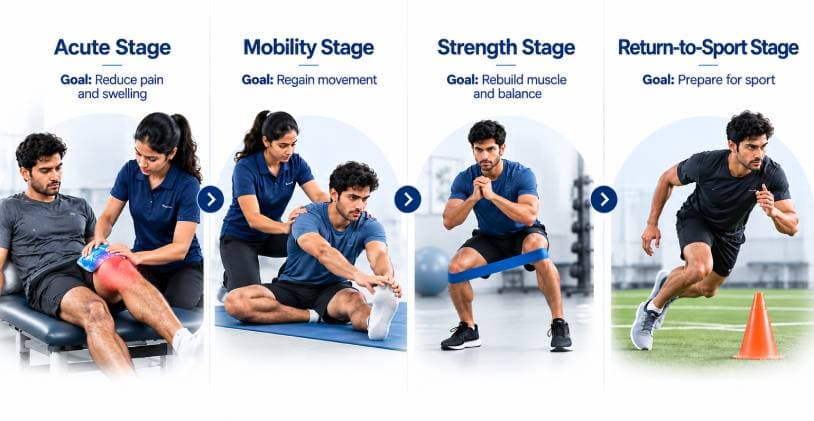
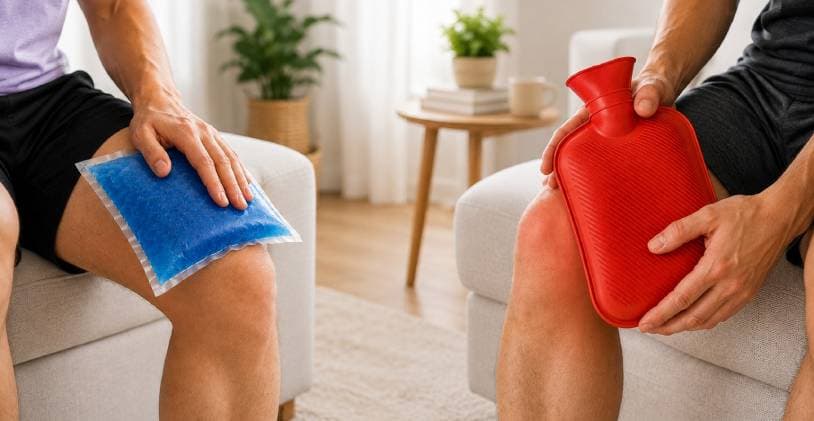
Athletes who go through these stages in order get hurt again less often. Skipping the strength stage is one of the reasons people end up back at stage one. In that first acute stage, a lot of the confusion is around what to reach for at home, and our guide on whether to use ice or heat covers that in more detail.
Each stage has its own kind of patience required. The acute stage asks you to slow down when everything in you wants to push. The mobility stage asks you to be consistent with repetitive movements that do not feel like "real" exercise. The strength stage asks you to sit with sometimes uncomfortable resistance work while your teammates are already back on the field. The return-to-sport stage asks you to trust a build-up even when you feel completely fine. Rushing any one of these does not just risk the same injury. It often sets up the next one.
Signs Your Body Isn't Ready Yet
No pain does not mean ready. Here are a few things worth checking before you go back to your sport.
- Swelling returns after training
- The injured side feels weaker or shakier than the other one
- Movement still feels tight compared to before
- You notice yourself avoiding certain movements without really deciding to
- Balance on the injured side feels less steady than the other side
If you notice any of this you probably need more time on strength work. Pushing through these signs is how a small problem turns into a long recovery in sports injury rehabilitation.
It also helps to check these things under some kind of fatigue, not when you are fresh. A joint or muscle can feel completely stable during the first few minutes of a session and start to feel shaky once you are tired. Since most injuries in games happen later in a match rather than in the first five minutes, testing readiness only when you feel fresh can give a misleading picture.
Creating a Safe Return-to-Play Plan
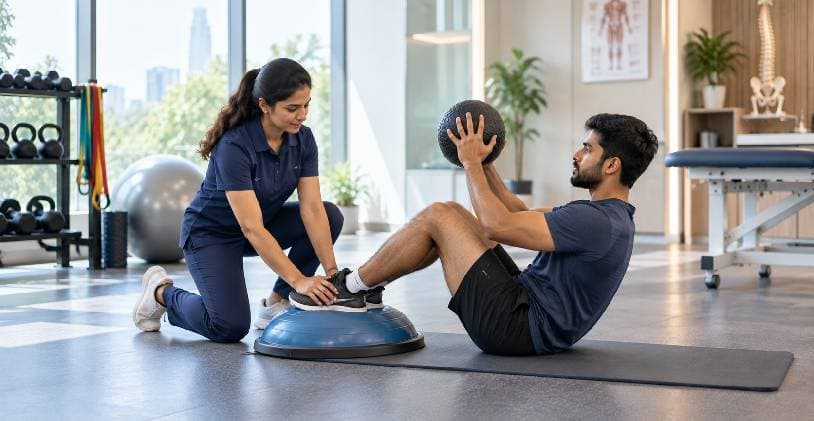
A return happens step by step in sports injury rehabilitation. Light activity first, then drills for your sport, then full training, and then finally real games. A physiotherapist sets this pace based on how your body is doing each week, not a fixed number of days.
If the injury is in your leg or foot it helps to strengthen your hip and ankle. Weak hips and ankles put stress on the knee during turns. If knee pain appears during this time, it is usually linked to the injury, so it gets treated as part of the same plan.
There's a mental side to this too. People do not talk about it enough. Being scared of getting hurt can quietly change how you move. Maybe you favour one leg without noticing or hesitate for a second during a play. That hesitation can end up causing the next injury.
This fear-based hesitation is more common than most athletes admit and it is not something willpower fixes. It usually fades on its own once the body has repeated proof through drills and controlled practice that the injured area can actually handle contact, direction changes and sudden effort. That is part of why the return-to-sport stage includes game-like drills before actual games. It is not only about physical readiness. It gives the athlete's mind the evidence their body needs.
Common Mistakes to Avoid During Recovery
Some habits tend to slow recovery down even with good intentions.
- Stopping strength exercises early because the pain feels okay
- Jumping into full-intensity training instead of building up slowly
- Ignoring small tightness or instability instead of telling a physiotherapist
- Comparing progress week to week instead of looking at the overall trend
- Trying to "test" the injury on your own outside of supervised sessions
It also helps to remember everyone heals at their own pace. Comparing your recovery to a teammate's injury usually just adds pressure. It does not actually help.
Another mistake worth mentioning is treating rehabilitation like a straight line. Progress in recovery rarely moves in a steady upward direction. Some weeks feel like a step forward and some weeks feel like nothing has changed at all even when the body is still adapting under the surface. Expecting a steady climb can make normal plateaus feel like setbacks, when they are often just part of how tissue and strength rebuild.
Nutrition and Rest Are Important Too
Exercises are only part of the picture. What you eat and how much you sleep also affect how fast you heal. Protein helps rebuild muscle and drinking water helps too. Sleep matters more than people think since a lot of healing happens while you rest. Treating these as part of your recovery, not an afterthought, usually leads to better progress.
Small consistent habits tend to matter more here than dramatic changes. Eating meals with enough protein, staying hydrated throughout the day and keeping a consistent sleep schedule will usually do more for recovery than any single "recovery trick." Stress also plays a role in this. High stress can affect sleep quality and how the body manages inflammation, both of which feed back into how an injury heals. Once you are back in full training, the same principles carry over into training hard while recovering right.
The Vyana Approach
At Vyana Physiotherapy you will not get a fixed timeline on your first visit. Your plan is based on how your body is healing and it gets checked again at each stage before moving forward. The goal is getting you back to your sport with confidence, not rushing you only to sit out again a few weeks later. If you are recovering from a sports injury and want a plan built around you, Vyana Physiotherapy's sports injury rehabilitation program is made for this.