

Neck
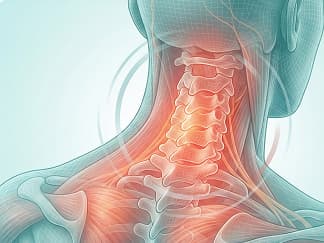
- Cervical Spondylosis
- Text Neck
If neck pain is affecting your work, sleep, or everyday activities, cervical spondylosis could be the reason.
If multiple Symptoms feel familiar, assessment helps
As we age, the joints and discs in the neck naturally change. For some people, these changes can lead to pain, stiffness, and reduced movement.

Disc Degeneration
The cervical disc presses outward.

Joint Stiffness
Pressure irritates nearby bones.

Nerve Irritation
Compressed nerves cause arm symptoms.

Limited Neck Movement
Turning the neck becomes difficult.
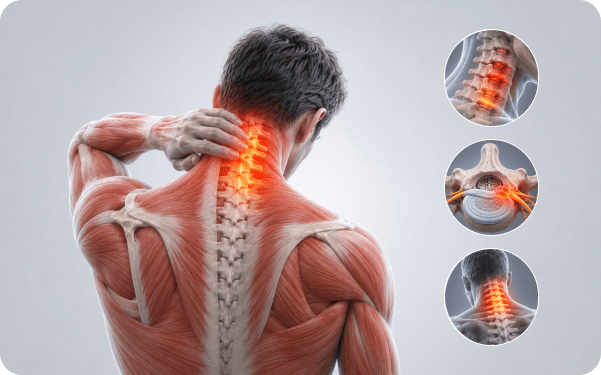
As the neck becomes stiffer, everyday movements can feel more painful without the right support.
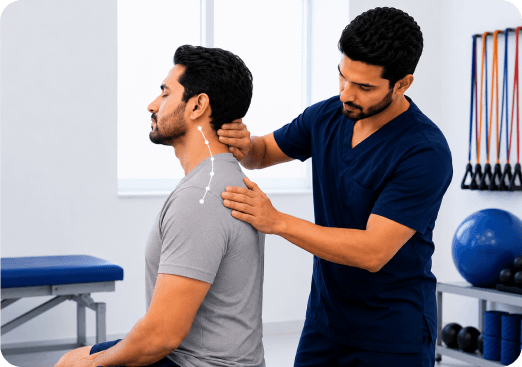
Your treatment plan is designed around your pain, lifestyle, and movement goals to help you return to everyday life comfortably.

We understand your pain, movement, posture, and how it affects your daily routine.


Play Information
2.00 Min
Consistent physiotherapy helps gradually improve neck movement, flexibility, and everyday function.
A structured, science-backed recovery journey designed to help you move from pain and limitation to strength, balance, and pain-free living.
You don't have to live with pain.
Book a session and begin moving more comfortably again.
Book an appointment
Answers to common questions about your recovery
Yes. Physiotherapy can reduce pain, improve neck mobility, strengthen the supporting muscles, and improve posture. Treatment focuses on easing pressure on irritated joints and nerves so everyday movement becomes comfortable again.
Cervical spondylosis develops as the discs and joints of the neck gradually wear with age. Long hours at a desk, sustained phone use, poor posture, and weak neck and upper back muscles speed up these changes.
Most cases settle with conservative care. Guided physiotherapy, posture correction, and progressive strengthening relieve symptoms without surgery. Surgery is considered only when there is significant nerve or spinal cord involvement.
Early relief is often felt within 2–4 weeks. A complete rehabilitation programme usually runs 6–12 weeks depending on the degree of degeneration, nerve involvement, and how consistently exercises are followed.
Yes. Hands-on therapy, gentle mobility work, and targeted strengthening reduce stiffness and muscle guarding, restoring smoother, less painful neck movement over time.
Yes. Virtual physiotherapy works well for most neck degeneration cases through guided exercise progression, ergonomic and posture correction, and regular symptom tracking, helping you recover safely from home.