



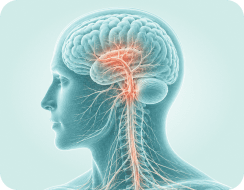
Stroke / Paralysis
- Stroke / CVA (Cerebrovascular Accident)
- Hemiplegia / Hemiparesis
Guillain-Barré Syndrome (GBS) can cause sudden muscle weakness, balance problems, and difficulty with everyday movement.
If multiple Symptoms feel familiar, assessment helps
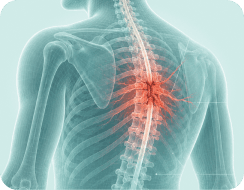
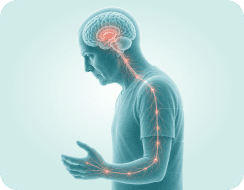
Guillain-Barré Syndrome affects the peripheral nerves, making it harder for your brain and muscles to communicate. This can lead to weakness, balance problems, and reduced movement.

Nerve Changes
The nerves struggle to send clear signals to your muscles.

Muscle Weakness
Simple movements may feel more tiring or difficult than before.

Balance & Coordination Loss
Walking and staying steady can become more difficult.

Functional Limitations
Everyday activities become more difficult.
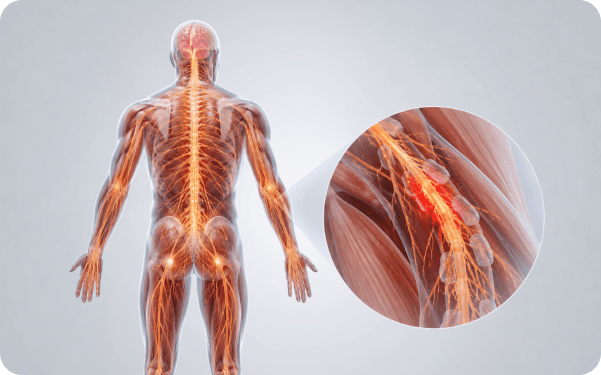
Recovery depends on nerve healing, early physiotherapy, and progressive rehabilitation.
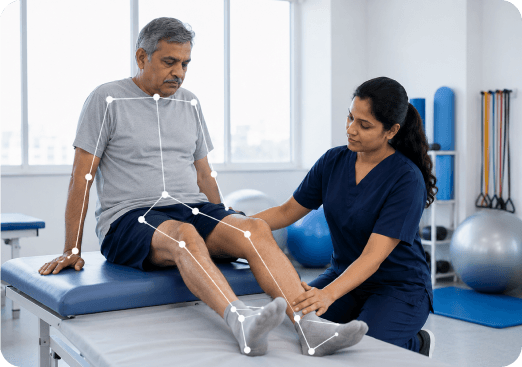
Recovery is carefully planned to rebuild strength, improve movement, and restore confidence step by step.

Evaluate muscle strength, sensation, balance, mobility, endurance, and daily function.


Play Information
2.00 Min
Every recovery journey is different, but consistent rehabilitation helps maximize nerve recovery and physical function.
A structured, science-backed recovery journey designed to help you move from pain and limitation to strength, balance, and pain-free living.
You don't have to live with pain.
Book a session and begin moving more comfortably again.
Book an appointment
Answers to common questions about your recovery
Recovery varies from person to person. Many individuals improve over several months, while others may require longer rehabilitation depending on the severity of nerve damage. Early, consistent physiotherapy supports the best possible outcome.
Yes. Physiotherapy rebuilds muscle strength, improves balance and coordination, and retrains walking and daily function as nerves recover. A structured program helps you regain independence safely.
Many people regain walking ability through guided gait training, strengthening, and balance work. Progress depends on the severity of nerve involvement, but meaningful improvement is common with consistent rehabilitation.
Rehabilitation should begin as early as it is medically safe. Early physiotherapy helps prevent stiffness and weakness while supporting a smoother, faster recovery.
Rehabilitation includes strength and mobility training, balance and coordination work, gait re-education, fatigue management, and functional independence practice for daily activities.