ACL Injury Recovery: A Timeline from Tear to Return to Sport
By Dr. Asma Multani, Physiotherapist, Vyana Care
Tearing your ACL is scary. The questions come fast. When can I actually run without thinking? Will this knee ever feel like it used to? Most things you'll read online either make it sound terrifying or make it sound like a quick fix, and honestly neither one is true. So here's a plain, straightforward look at what ACL recovery actually looks like, from the day it happens all the way to getting back on the field.
What Happens When the ACL Tears
Let's start with the basics. The ACL sits inside your knee and stops your shinbone from sliding forward too much. It usually tears during a sudden stop, a sharp turn, or a landing that goes wrong. That's exactly why sports like football, basketball, and skiing produce so many of these injuries, since all three sports involve that kind of quick and unpredictable movement.
Most people remember the exact moment it happened. There is often a loud pop, sometimes loud enough for people nearby to hear it too. That sound comes when the ligament fibers snap under sudden stress, almost like a rubber band pulled too far and too fast. Right after that, the knee can feel strange in a way that's hard to describe, not always painful at first, just wrong somehow, like something inside shifted out of place. Swelling follows within a few hours and the knee starts feeling unreliable. A little shaky. Like it might buckle if you put weight on it wrong. That feeling is your body's way of saying something isn't doing its job anymore.
Here's something people don't always realize though, surgery isn't compulsory for every ACL tear. If your everyday life doesn't involve pivoting or cutting, a well built non surgical rehab plan can genuinely get you back to normal. The OrthoInfo (American Academy of Orthopaedic Surgeons) — guide to ACL injuries draws the same line between lower demand activity and pivoting sport. For anyone playing a sport with quick direction changes, surgery tends to offer a much stronger shot at real stability. That is a big part of why a solid surgical recovery plan matters so much for athletes hoping to return to their sport.
The First Two Weeks: Managing Swelling and Pain
Whether you're at pre-surgery stage or had it done recently, the early goal is simple. Get the knee calm. Nothing more complicated than that. This stage is mostly about three things.
- Bringing swelling down with rest, ice, compression and elevation
- Getting movement back, especially getting the leg fully straight
- Protecting the healing tissue while gently reactivating the muscles nearby
None of it feels dramatic and its not supposed to. But rush through this part and you'll likely feel it later. A stiff knee early on tends to hold back everything that follows, so patience here actually pays off later.
Weeks 2 to 6: Rebuilding the Foundation
As swelling starts to fade, focus shifts toward getting your range of motion and adding light strengthening. This is usually when a physiotherapist becomes a key part of your recovery. Here's roughly what that stretch looks like.
| Recovery Goal | Focus During Weeks 2 to 6 |
|---|---|
| Range of motion | Getting the knee fully straight, then slowly building toward a full bend |
| Muscle activation | Waking up the quad muscles, which tend to shut down after an injury like this |
| Weight bearing | Relying less on crutches over time, if you needed them at all |
| Swelling control | Sticking with icing and gentle movement day to day |
This part can drag, no doubt about it. But its building the base everything else depends on. Jumping into running or jumping soon here is one of the easiest mistakes to make.
Months 2 to 4: Strength Becomes the Priority
By this stage most people are walking normally with decent movement in the knee. So attention shifts toward building strength back up. This tends to be the longest, most demanding stretch of the whole process, mostly because strength takes real time no matter how much effort goes in.
Physiotherapists usually include squats, step ups and balance training, all aimed at helping your brain trust the knee again. Cycling and swimming often get added too, since they build fitness without putting too much load on the healing graft.
Here's a detail worth knowing. The graft used in ACL reconstruction actually goes through a biological remodeling process as it heals. At certain point during this window, its at one of its weakest structural stages, even though you might feel fairly strong yourself. That's why recovery timelines follow how tissue actually heals, not just how the knee feels on any given day.
Months 4 to 6: Running and Sport Specific Movement
Around the four month, many rehab programs start reintroducing running, assuming the right strength and control benchmarks have been met. For a lot of people this feels like a real turning point, since running is often the first thing that feels like actual sport again.
From here, things build up step by step.
- Straight line running, which gradually shifts into change of direction drills
- Sport specific movements like cutting, jumping and controlled landings
- Non contact drills matching whatever sport you're working back toward
Each new step only gets added once the previous one feels easy and pain free. Working with a proper physiotherapy program really matters here, since a trained eye catches small habits or compensations that are easy to miss on your own. The same staged thinking runs through all sports injury rehabilitation, not just ACL recovery.
Months 6 to 12: Return to Sport Testing
This part trips a lot of people up. Time by itself doesn't clear you for sport, no matter how many months have gone, good rehab programs rely on actual testing before giving someone green light, and that usually includes things like these.
- Strength testing that compares your injured leg to your healthy one
- Hop tests that measure distance, control and how you land
- Psychological readiness, since fear of getting hurt again is real and very common
“We are seeing a real epidemic of injuries in youth sports, and a lot of it comes from overuse and from young athletes getting back into competition before they are ready.”
Study after study shows the same pattern. Athletes who go back before hitting these benchmarks face a much higher chance of re-tearing the ACL, or hurting the other knee instead. Waiting those extra few weeks for proper clearance is genuinely one of the smartest calls anyone can make for their knees.
A Realistic Snapshot of the Timeline
Here's a rough breakdown of each phase, its timeframe and what it focuses on.
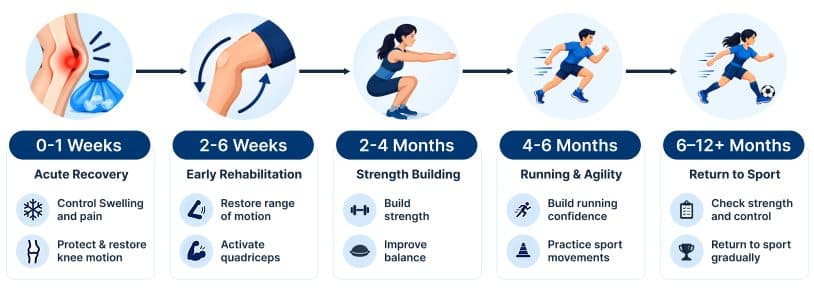
Keep in mind that this shift depends on age, sport, the graft used and how consistently someone sticks with rehab. No two knees heal at the same pace, which is exactly why personalized guidance matters so much throughout the whole process.
Why Patience Pays Off
It is easy to measure recovery by the calendar instead of real progress. But a good recovery timeline works best when it follows strength, control and confidence, not some date circled months back. Going back too soon is one of the biggest reasons people get hurt again, while a slower and well guided recovery gives the knee the best possible shot at staying strong for years. That long view is the same reason guided rehab matters for the knee later in life too, something we cover in our guide on whether physiotherapy can help avoid knee replacement surgery.
The Vyana Approach
Recovering from an ACL tear is a journey, plain and simple, with every stage building on the one before it. From calming down that early swelling to passing your final return to sport tests, each phase plays its part in getting the knee back to feeling strong and dependable. If you are working through your own ACL recovery or supporting someone else through theirs, having experienced professionals in your corner really does make a difference in how smooth that whole journey feels.