
Can Physiotherapy Prevent Surgery? Here's What You Need to Know
By Dr. Sakshi Bhatia, Physiotherapist, Vyana Care

Someone comes into the clinic, doctor's already mentioned surgery, and you can see it on their face before they even sit down. It's a scary word. We get why. But a lot of the knees, backs, and shoulders we see never actually make it to an operating table. They get sorted through physiotherapy instead. Not every single case, we won't pretend that. Just more than people assume. Below is what actually helps, roughly how long it takes to notice something, and why sitting on it isn't usually the smart move.
Can Physiotherapy Really Prevent Surgery?
Watch someone's face when you say “surgery” to them. It changes almost immediately, every time.
Truth is, an operation usually isn't step one, and quite often it's not even the best step. Physiotherapy done right, built around your actual body and your actual problem instead of some template, turns things around for a lot of people before surgery ever becomes necessary.
It's not about muting pain for a week either. Your physiotherapist wants to know why you're hurting in the first place. Then treatment goes after that: exercise, hands-on work, fixing how you move, homework for you to do outside sessions. Most of the healing is your body doing its thing. We just help point it the right way.
That's the whole reason doctors say it so often. Try physio first. Less risk, no hospital bed, back on your feet quicker.
How Physiotherapy Helps You Avoid the Operating Table
Physiotherapy uses what your body's already capable of. Moving, adapting, healing. No scalpel, no prescription pad, just a plan for your specific issue. Could be strengthening whatever joint's giving trouble. Could be manual therapy and posture fixes. Sometimes it's genuinely as small as changing how you sit at a desk all day.

Stronger muscles, joints moving properly, less pressure on the injured spot. Pain tends to follow that down. Plenty of people feel a real shift within a few weeks. Often that alone is what convinces someone surgery wasn't the only road.
Which Conditions Respond Well to Physiotherapy?
More things respond to physio than people expect. Back pain generally improves with better spinal stability and posture. Neck pain settles once tension eases and movement returns. Frozen shoulder often gets its full range back with steady work. Osteoarthritis does better once the surrounding muscles get stronger and share the load. Mild to moderate meniscus injuries usually improve with rehab alone, and partial rotator cuff tears heal fully more often than people think. Tennis elbow tends to sort itself out with treatment, and sciatica responds well to guided rehab too, in most cases.
Something has been bothering you for a while? Worth a look at what actually drives neck pain and how it recovers before anything more invasive gets discussed.
When Surgery Is Still the Right Call
We're not going to pretend physio fixes everything. It doesn't. A complete ligament rupture needs a surgeon. So does a major tendon tear, a severe fracture, or joint damage that's gone past what rehab can undo. Progressive nerve compression, a tumor, infection, an emergency spinal issue, these aren't things physiotherapy handles alone.
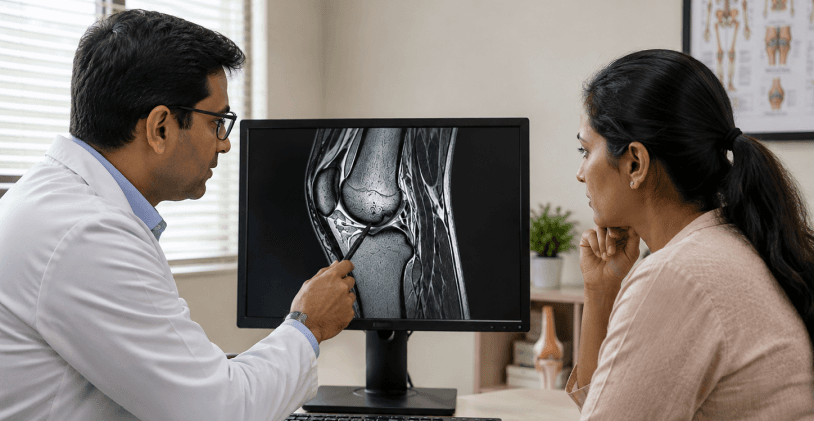
Even so, physio doesn't step out of the picture entirely. It preps the body beforehand, and once surgery's done, it's usually the biggest piece of how well and how fast someone actually recovers.
Why Doctors Recommend Physiotherapy First
Conservative treatment gets tried first for a reason. Lower risk. No hospital stay. Fewer complications. You walk away with strength that keeps supporting the joint long after treatment's over, and the cost isn't remotely close to a surgical bill.
It's not just clinics saying this to sound nice. Clinical guidance backs it for osteoarthritis, lower back pain, shoulder problems. The UK's National Institute for Health and Care Excellence low back pain and sciatica guideline (NICE, via PubMed) says the same, and so does the American Academy of Orthopaedic Surgeons.
Why Doesn't Pain Always Mean You Need Surgery?
Pain's an alarm, not a diagnosis. It tells you something needs attention. It doesn't mean something's broken. Usually it's weak muscles, bad posture, a stiff joint, or an imbalance that's been building for months without you really clocking it.
Physio goes after that cause instead of just quieting the alarm. Movement improves, inflammation settles, muscles start working properly again, joints get the support they need. Your body gets back to fixing itself. If you're curious how this plays out day to day, our guide on why posture is not about sitting straight breaks it down further.
The Real Benefits of Choosing Physiotherapy First
People are often caught off guard by how much rehab alone can do. Pain usually eases first. Flexibility comes back next. Less medication needed. Posture improves without you forcing it. Balance gets steadier. Most people are back to normal life quicker than they expected, and it costs a fraction of what surgery would.
The part that actually matters most, though: it holds. You leave knowing how to keep your own strength and mobility going, long after your last session.
How Long Should You Try Physiotherapy Before Considering Surgery?
Comes up all the time, usually from someone who feels like they've stalled out.
Honest answer, healing isn't on a fixed timer. Some people heal fast, some slower. Most notice real change somewhere between four and eight weeks in, assuming they stick with it. Harder injuries can take longer, and that's not unusual. Your physiotherapist tracks progress the whole time and adjusts as needed. If nothing's really moving despite doing everything right, that's usually when talk turns to further tests or surgery.
What Actually Happens During a Physiotherapy Session?
People put off that first booking a lot, mostly because they're not sure what it involves. It's less intense than people imagine. Your physiotherapist asks about your pain, what triggers it, your strength, how you walk, a bit of your medical history. Nothing complicated, just enough to build a plan around you instead of a generic one.
After that, you get something specific to your condition. Hands-on treatment maybe, guided exercises, stretching, posture work, plus a few small things at home so things keep moving between visits.
Physiotherapy Matters After Surgery Too
Even when surgery is needed, physio isn't done with you yet. Someone has to work through the stiffness and swelling afterward, rebuild whatever strength surgery took, get your movement and stability back close to normal. Post-surgical rehab is what does that. Gets you back to work, sport, everyday life, without leaving you set up for another injury down the line.

Why Early Treatment Makes All the Difference
A lot of people wait until it's really bad before they do anything. Something manageable early on turns into something much bigger while nobody's paying attention. Old ache, fresh injury, doesn't matter which. Starting physio early usually stops things worsening, gets movement back sooner, and lowers the odds surgery ever comes up at all. This pattern shows up again and again. Early help tends to lead somewhere better.
The Vyana Approach
At Vyana Physiotherapy, dodging surgery isn't the actual goal. Finding what's causing your pain is. Building something around your specific situation, and helping you rebuild strength in a way that actually lasts.