
Carpal Tunnel Syndrome: Early Signs and How Physiotherapy Can Help Before Surgery
By Dr. Sakshi Bhatia, Physiotherapist, Vyana Care

You know the feeling that when you wake up and your hand is just... gone? Numb, like it belongs to someone else. Or you're on your phone too long and your fingers start with that pins and needles thing. It happens to a lot of people. Most of us just shake it off and carry on with their day, because it doesn't feel like much at first.
We hear the same handful of lines almost every week at the clinic.
“My hand keeps going numb.”
“I keep dropping things.”
“My wrist hurts whenever I work too long.”
Usually, that's early carpal tunnel syndrome. Here's what tends to surprise most people though: surgery is not the only option. Plenty of patients heal with physiotherapy on its own, especially the ones who show up early rather than wasting the time.
What Is Carpal Tunnel Syndrome?
There's a tight little passage inside your wrist. That is what the carpal tunnel. A nerve called the median nerve threads through it, packed in right next to the tendons responsible for moving your fingers. NHS: Carpal tunnel syndrome describes the same pattern of pressure on that nerve and the symptoms it sets off.
Swelling or irritation in that tissue means pressure on the nerve. And that pressure is behind everything else: the numbness, the tingling, sometimes pain, sometimes a weaker hand than you're used to.
Repetitive hand use is the common thread. Typists, tailors, musicians and the people who drive for a living. Anyone whose day involves a keyboard or a phone screen for hours. Ages 30 to 60 see it most, and for some reasons that still aren't entirely clear, women occur more than men.
Early Signs You Shouldn't Ignore
Catch it early, deal with it easily. That's really the whole idea here.
A few things worth paying attention to:
- Tingling or numbness across your thumb, index finger, middle finger, and part of your ring finger, usually worse once you're in bed
- Wrist pain that creeps in after typing, writing, or too much time scrolling
- Grip strength that weakens out of nowhere, jars you used to open without thinking now put up resistance
- Fingers that feel swollen to you but look perfectly normal to anyone looking at them
- Dropping things more than you used to, keys, a mug, your phone
None of this ringing a bell? Good. But if it rings, don't just wait around. Early attention here tends to make the whole thing easier to manage. It's the same pattern we see with wrist and thumb strain from long gaming sessions, where small early signs get brushed off for months.
Why Physiotherapy Is Usually the First Choice
Doctors also choose physiotherapy first for a reason, at least when the case is mild to moderate. It isn't about numbing what hurts. It's about dealing with the pressure on the nerve directly, which is really the source of everything.
What treatment aims to do:
- Ease the swelling sitting around the nerve
- Get blood moving better through the area
- Bring back normal movement in your wrist and fingers
- Rebuild strength you've lost in your hand
- Sort out the daily habits quietly before the problem becomes more
That last one catches people off guard more than anything else. How you rest your wrist at your keyboard. How you hold your phone half-asleep at 11pm. Small stuff, but it adds up on the nerve over time without you clocking it.
A physiotherapist tends to spot these patterns pretty quickly and can advice you toward small fixes that keep the problem from circling back.
“The good physician treats the disease; the great physician treats the patient who has the disease.”
Physiotherapy vs Surgery
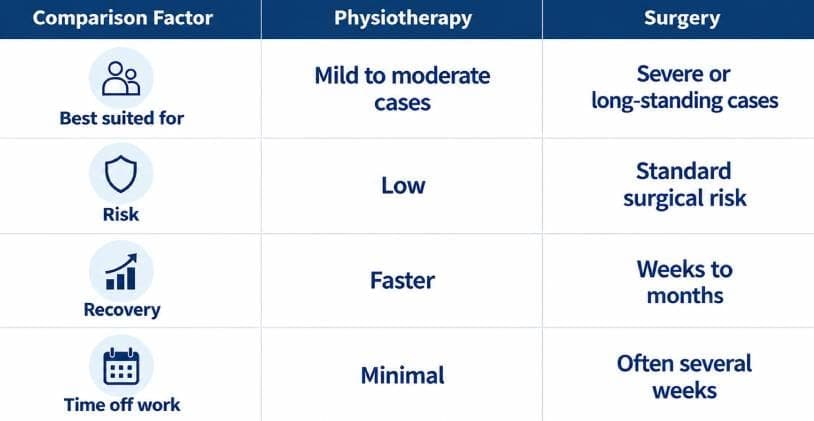
Given all that, physiotherapy tends to be where most people are better off starting. It's worth reading how physiotherapy can prevent surgery for other conditions too, because the reasoning is much the same.
What Happens During Physiotherapy?
Treatment gets shaped around your own symptoms, since carpal tunnel doesn't look identical from one person to the next. A handful of approaches show up again and again though.
Nerve Gliding Exercises
Gentle, unhurried movement that helps the nerve move through the tunnel the way it's meant to. As that movement comes back, the pressure tends to let go, usually over a few weeks of consistent practice.
Wrist Splints
Night tends to be worse for most people, mostly because the wrist bends on its own while you're asleep, nothing you can really control.
A splint just holds your wrist straight overnight. Takes the pressure off, and a lot of people notice the difference the next morning.
Manual Therapy
Hands-on work from your physiotherapist, usually starting at the wrist but often reaching the forearm and shoulder too.
Odd as it sounds, muscle tightness up near your shoulder can add pressure that shows up down at your wrist. Working the whole arm as a unit tends to beat treating the wrist in isolation.
Ultrasound Therapy
A number of clinics, including ours, use therapeutic ultrasound. Gentle sound waves reach deep into the tissue.
Helps with inflammation, supports healing, eases discomfort, particularly alongside the other treatments above.
Ergonomic Advice
Small adjustments to your everyday setup matter more than people expect.
Things a physiotherapist might point out:
- Your desk height
- Keeping wrists neutral while typing
- Breaks every 30 to 40 minutes
- How you're holding your phone or sitting at your computer
None of it dramatic on its own, but together it takes real weight off your wrist across a normal day.
When Physiotherapy May Not Be Enough
Most people improve, but not everyone does. Time to talk to a specialist if:
- Numbness sticks around constantly, even with your hand fully at rest
- There's visible muscle loss near your thumb's base
- Months of consistent physiotherapy haven't moved the needle
Even then, physiotherapy still has a place, before surgery and after, supporting strength and recovery along the way.
Simple Habits That Can Help
A handful of daily habits go a long way alongside treatment:
- Break every 30 to 40 minutes if you're at a computer
- Wrist straight while typing, not bent
- Skip resting your wrist on hard edges
- Stretch your hands and wrists through the day
- Loosen your grip on your phone
None of these replace physiotherapy. Together though, they help keep things from coming back once you're better.
How Vyana Physiotherapy Can Help
Nobody gets a copy-paste treatment plan at Vyana Physiotherapy. Each plan starts with your actual situation, your symptoms, your daily routine, the habits quietly adding pressure on your wrist.
From there, we build something suited to you, aimed at the actual source of the pain rather than just the surface symptoms.
People who come in early often skip surgery entirely.
Numbness, tingling, or wrist pain hanging around? Don't just wait it out. Catching it early usually means an easier, faster recovery, and getting back to your normal life without your hand slowing you down.