Gaming Injuries: How Long Gaming Can Cause Wrist, Thumb & Neck Pain
By Dr. Asma Multani, Physiotherapist, Vyana Care

You put the controller down after many hours. Thumbs get stiff. The wrist hurts a bit when you move it. The neck feels heavy too, stuck in one spot for so long. Well, it was stuck in one spot. Most people just shrug and forget about it. Happens every time you play long anyway, so why bother thinking about it.
But here's the thing. A little stiffness after one long weekend can slowly become something worse. It shows up sooner each time. It takes longer to go away too. That's basically gaming injuries in a nutshell. And honestly, they happen a lot more than people think, especially if you play for hours and never really stop to move.
It's not just the competitive players or the streamers doing eight hour sessions daily. Someone playing two or three hours after work gets the same problem. A student who spends the whole weekend on a new game too. Even someone scrolling mobile games on the bus ride home. Your body doesn't care if the gaming is casual or serious, it just cares about repetition and posture. Both show up no matter how much you actually play.
Why Do Gaming Injuries Even Happen
Gaming doesn't seem like hard physical work. No heavy lifting involved. Nothing that looks tough from outside, not like carrying boxes or running would look. That's exactly why the strain sneaks up on people, they don't see it coming. Your wrist, thumb, and neck keep doing the same small movements again and again, sometimes for hours, without much of a pause.
Your thumb pushes the same joystick direction hundreds of times in one match. Your mouse hand does tiny repeated movements the whole session. Your neck stays tipped forward and hardly moves from that spot. None of this feels like a big deal while you're playing. But add it up over weeks, it adds up fast. The tendons, muscles, and nerves in those spots start to get irritated eventually.
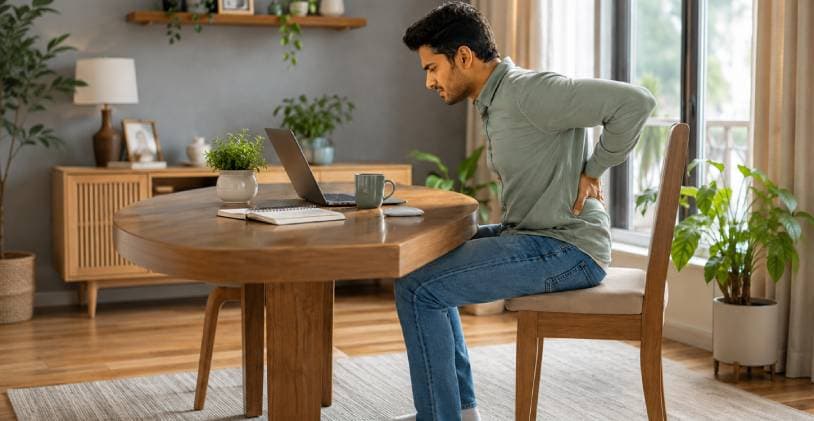
When you're deep in a match, you're not thinking about your shoulder inching up toward your ear. Or your wrist bent at some odd angle on the desk. Someone typing at a desk job at least gets up sometimes, for coffee or a meeting maybe. A gaming session can go on for hours with no real break at all. So your wrist, thumb, and neck barely get any chance to rest in between.
“Sitting is the new smoking.”
What Wrist Pain from Gaming Feels Like
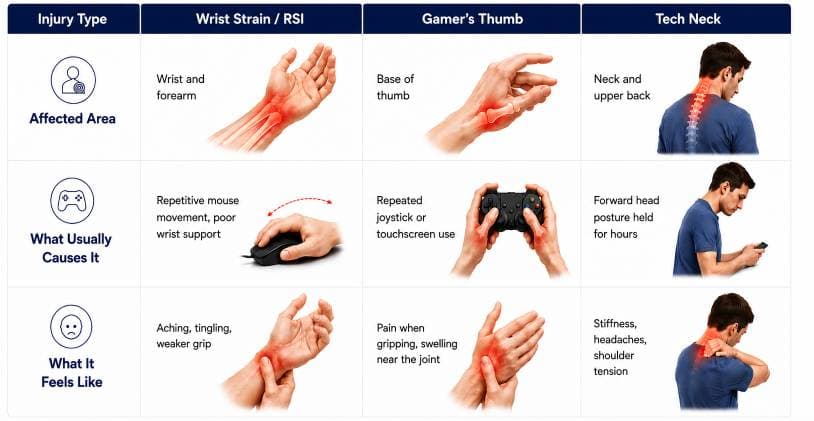
Wrist pain is usually what people notice first. Especially PC players who use a mouse a lot for long sessions. This is often a repetitive strain, sometimes called RSI, basically the tendons around the wrist getting irritated from the same movement over and over. NHS: Repetitive strain injury (RSI) describes exactly this pattern, where repeated movement and overuse of the same muscles and tendons builds into lasting pain.
It's small at first. Just a slight pain after a long session that goes away by morning. But ignore it long enough and it turns into something sharper. Sometimes numbness spreads into the fingers too. Some gamers end up with carpal tunnel syndrome eventually, where a nerve in the wrist gets squeezed and grip strength starts fading.
A few things make it worse:
- Resting your wrist at a bad angle on the desk
- Gripping the mouse or controller harder than you need to
- Skipping breaks during long sessions
- Using a setup not really made for hours of play
Gamer's Thumb: The One Console and Mobile Players Know
Play mostly console or on your phone? Your thumb takes the beating here, honestly. Doctors have a fancy name for it, De Quervain's tenosynovitis, but nobody really uses that. People just say gamer's thumb. Basically the tendons on the thumb side of your wrist swell up. From doing the same movement, again and again.
Pain sits right at the base of the thumb. Gets worse the second you grip something too. Opening a jar. Holding a mug. Doesn't matter what it is. Mobile gaming has made this way more common lately, and it's not hard to see why. Your thumb is tapping and swiping almost non stop. Your phone usually sits at some awkward angle in your hand while you do it.
Why Your Neck Hurts After Long Hours of Gaming
Neck pain, this one's different. Not really about repeating movements. More about posture. Your head tips forward to look at the screen, and the muscles at the back of your neck end up working way harder just to hold it there. Lean your head forward more, and it gets heavier for those muscles. Simple as that.
During a long session that forward posture just stays put for hours. Barely moves. Give it enough time and you get stiffness, tired neck muscles, headaches too, usually starting near the back of the skull. Some people call this tech neck. Gaming makes it worse mostly because sessions run long. Longer than most other screen time, anyway.
Comparing the Three Common Gaming Injuries
Here's a quick side by side look at how these three injuries differ.
What Actually Helps Prevent These Injuries
Gaming injuries are avoidable most of the time. Good news is you don't need to quit gaming for that. People are often surprised to hear that part. Really it just takes a few habits. Ones most gamers haven't picked up yet.
- Take a short break every 30 to 45 minutes and stretch your wrists, thumbs, and neck
- Keep the screen at eye level so your neck stays neutral
- Use ergonomic gear like a wrist rest or a controller grip that eases hand tension
Warming up your hands before a long session helps too. Kind of like athletes warming up before training. Just a smaller scale, obviously. A minute of wrist rotations. Some thumb stretches. A few neck tilts. Do this before you start and it can genuinely help.
Chair height matters more than most people realize. Elbows sitting lower than your wrists while gaming? That angle adds extra strain with every move you make. Raise the chair a little. Or slide a cushion under your forearms. Either one takes a lot of pressure off, and you don't have to change how you actually play. The same ideas behind a desk setup that keeps back pain away apply just as much to a gaming station.
When Gaming Pain Is Worth Getting Checked
A bit of soreness after long hours of playing, that's usually not a big deal. Goes away on its own most of the time. But say the pain sticks around more than a few days. Or it gets worse when you move. Or numbness and tingling show up. That's your body telling you something, and it's worth a proper look instead of just waiting around hoping it fades.
“Ignoring early wrist strain or gamer's thumb rarely makes it go away on its own. It usually just gives the tendons more time to stay irritated, which means recovery takes longer once you finally get it checked.”
The Vyana Approach
At Vyana Physiotherapy, we're seeing more young patients these days. Students, working professionals, all walking in with wrist pain, thumb stiffness, or an ache at the back of the neck. Gaming keeps being the common thread. These injuries aren't sudden like a sprain from falling would be. They creep up slowly instead, and that's exactly why most people just ignore them. Right up until the pain gets bad enough that it's hard to miss. Typing starts feeling harder. So does holding a cup. Even turning the head to check a blind spot while driving.
We start by looking at your actual gaming habits, not just where it hurts. How you sit. How you hold your controller or mouse. How long your sessions usually run. Whether you even take breaks. Treatment after that usually mixes a few things together. Hands-on therapy to loosen tight tendons and muscles. Some targeted strengthening for the wrist, thumb, and neck. A few practical changes to your desk or gaming setup too. We're never telling anyone to stop gaming. The whole point is helping your body handle it without breaking down on you.