Why Mobility Goes Down After 40 (and What You Can Do About It)
By Dr. Sakshi Bhatia, Physiotherapist, Vyana Care

Are you 40 now? Or a little more?
Then you know this feeling. You bend to pick up something from the floor. Your knee makes a sound. Tak. You sit on the floor with your kids for some time. Getting up is not easy anymore. You need to hold the sofa. Even tying your shoes feels a bit hard now.
These are small things.
You don't really think about them.
You just get up. And go.
But trust me, it's not just you. Almost everybody goes through this. For most people it starts at around 40.
Many people think, "Ok, I'm getting old, nothing can be done." That's the mistake. A lot can be done. I have seen people in their 50s who move better than they did at 30. What did they do? Nothing magic. They just started taking care of their body.
So let's see what is happening in your body, and what helps.
What Changes in the Body After 40
When you walk, bend or climb stairs, many parts of your body are working together. Muscles. Joints. Bones. Even your brain. After 40, all of these start changing a little more than before.
Let's go one by one.
1. Muscles Become Smaller
This happens slowly. You won't notice it at first.
Doctors call it sarcopenia. Big word, simple meaning. You lose muscle as you grow older. It starts in your 30s and in your 40s it goes faster.
Why is it a problem? Muscles hold your joints in place. They give you power to move. Less muscle means stairs feel harder. Bags feel heavier. You get tired faster. This is exactly why strength training after 40 matters so much.
2. Joints Lose Their Cushion
Inside every joint there is a smooth layer. It's called cartilage. It works like a cushion between two bones.
Think of a pair of slippers. Soft at first. After a year, flat. Your cartilage is the same. After 40 years of walking, standing and sitting, it gets thinner.
That's why your knees or back feel stiff in the morning. They need some time to warm up now.
3. Bones Get Weaker
Bones also become a little weak with age. Women feel it more around menopause. Men also go through it, just a bit slower.
So a small fall that was nothing at 25 can cause a fracture at 45. That's why physiotherapy becomes more important as you grow older.
4. Body Becomes Less Flexible
Do you remember touching your toes in school? So easy. Try it now. Not so easy, right?
The parts that join your muscles and bones lose their stretch over time. But here's the good part. This is the easiest thing to fix. Some simple stretching, done often, can bring back a lot of it.
5. Balance Gets Slower
When you trip, your brain sends a message to your muscles. "Catch yourself!" With age, this message reaches a little late. Only by a bit. But that tiny bit can be the reason you fall.
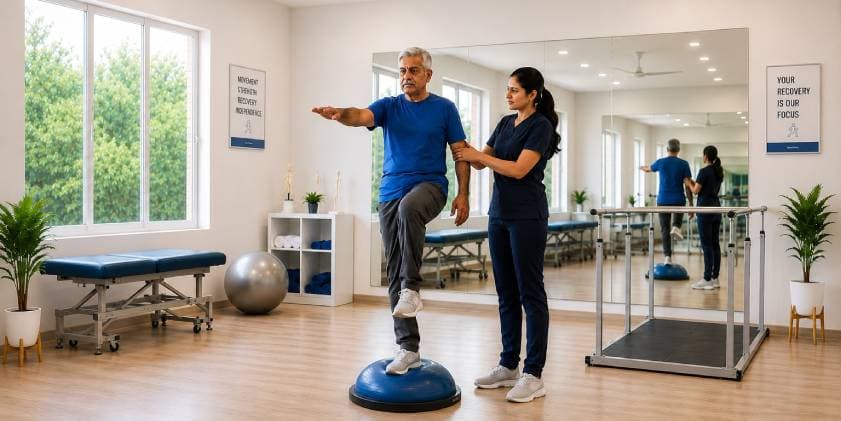
That's why older people fall more. The good news is balance can be trained, just like muscles. These balance exercises for fall prevention are a good place to start.
Sitting Too Much Makes It Worse
Honestly, too much sitting is maybe a bigger problem than age.
Sitting at the office all day. Sitting in traffic. Then sitting on the sofa watching TV at night. Your hips get tight. Your back gets weak. Your joints don't move. If you work from a desk, this desk setup and movement routine can help.
The body is simple. What you don't use, you lose.
So it's not about how old you are. It's about how much you move.
Signs Your Mobility Is Going Down
You will feel these before anyone tells you. Check if any of these are true for you:
- You feel stiff after sitting or after waking up
- You need support to get up from the floor
- Bending down feels hard
- You feel a little shaky on stairs
- You walk slower than before
- You get tired quickly, like at a wedding or a market trip
If two or more are true, it's time to start doing something. No need to worry. Just start.
Simple Table: What Changes After 40
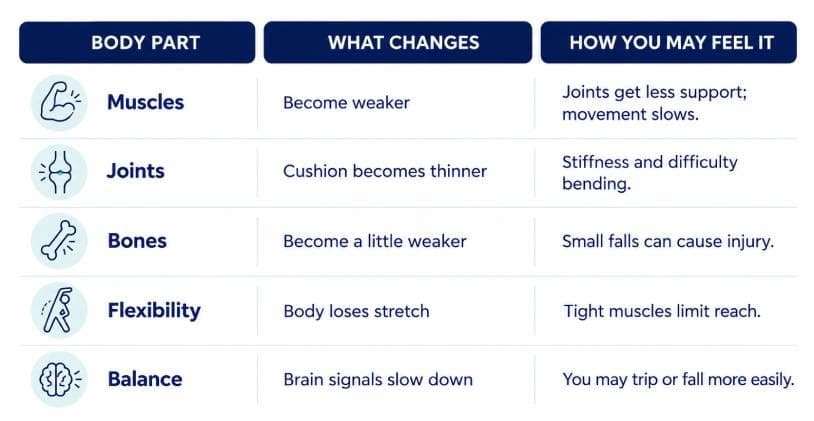
See this table once. There's not one reason. It's five changes coming together. So only walking or only stretching is not enough. You need a bit of everything.
Can You Slow It Down?
Yes. You can. That's the one thing I want you to remember.
Many studies say the same thing. People who stay active after 40, do some strength exercise and stretch regularly slow down this change. The World Health Organization's physical activity guidelines also recommend regular muscle strengthening and balance work as we age. Your body still listens to you. Age doesn't stop that.
Moving Helps Your Joints
Joints like movement. When you move, they stay healthy. Even small things help. Stretch for one minute before you get out of bed. Get up from your chair once every hour. Simple, but it works.
Strength Exercise Is Very Important Now
After 40, if you do one thing, do strength exercise. It builds back the muscle you are losing. It also makes your bones stronger.
You don't need a gym. Your own body weight is enough to start.
Small Daily Habits
These take little time. But they help a lot.
| Habit | What to Do | Why It Helps |
|---|---|---|
| Move every hour | Get up and walk for 2 minutes | Body doesn't get stiff |
| Stretch in bed | Stretch legs, arms and back before getting up | Joints get ready for the day |
| Eat protein | Have dal, paneer, eggs, curd or sprouts | Muscles stay strong |
| Drink water | Keep a bottle near you | Joints stay healthy |
| Sleep well | 7 to 8 hours every night | Body repairs itself at night |
Easy Exercises That Really Work
No need for anything fancy.
- Walk. 20 to 30 minutes, most days. Fast walk, not slow. An evening walk with family is perfect.
- Sit and stand. Sit on a chair. Stand up slowly. Sit down slowly. Do it 10 times. Sounds easy? Try it. You will feel it in your legs.
- Lunges. Start with a few. Slowly do more.
- Stretching. Two times a week is good. It helps your body. It also relaxes your mind.
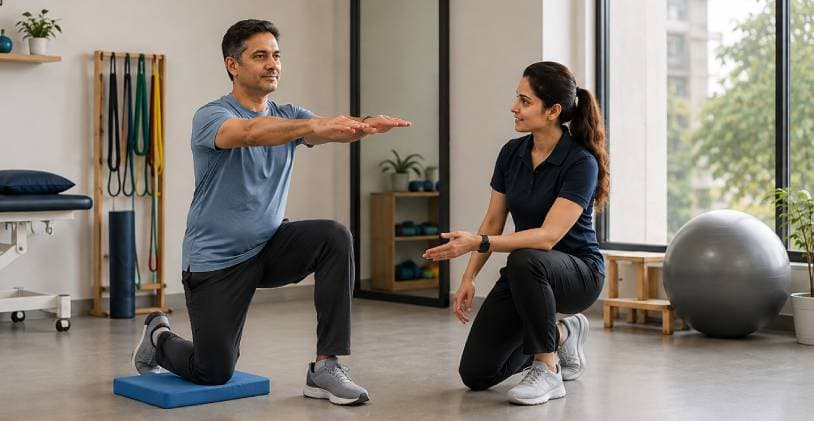
- Stand on one leg. Do it while brushing your teeth. One minute on each leg. Looks funny, but it really helps balance.
A Simple Weekly Plan
Many people ask me, "When do I find time?" Here's an easy plan:
| Day | Focus | What to Do |
|---|---|---|
| Monday | Legs | Squats, lunges, sit and stand |
| Tuesday | Stretching | Yoga or full body stretch |
| Wednesday | Walking | 30 minute fast walk |
| Thursday | Balance | Stand on one leg, walk in a line |
| Friday | Full body | Move your hips, shoulders and back gently |
| Saturday | Fun activity | Swim, play with kids, go for a long walk |
| Sunday | Rest | Light stretching and good sleep |
You don't need to follow this exactly. Change days if you want. Miss a day if you are busy. That's ok. Just keep some routine. Doing a little often is better than doing a lot once in a while.
How We Help at Vyana
At Vyana Physiotherapy, we don't give the same plan to everyone. Because everyone is different.
A teacher who stands all day has different problems. Someone who sits at a laptop for 10 hours has different problems. A retired person who walks every morning has different problems. One plan can't fit all of them.
First We Check How You Move
We start with a check. We look at how you stand, how your joints move, how strong your muscles are, and what your daily routine looks like.
Many times the pain is in one place but the problem is somewhere else. Knee pain can come from the hips. Neck pain can come from how you sit at your desk.
Then We Make a Plan for You
After the check, we make a plan for you. It can have stretching, strength exercise, hands on therapy or fixing your posture.
One of our physiotherapists always tells patients:
“Most people come only when the pain starts. By then you are already behind.”
It's true. It's always easier to fix problems early.
We Stay With You
We don't want you to feel better for just one or two days. We want you to keep moving for years.
That's why we also talk about your habits. How you sit. How you sleep. How your day goes. What you do at home is as important as what we do in the clinic.
When Should You Visit a Physiotherapist?
Come and see us if:
- Your body stays stiff for more than 30 minutes after waking up
- Joint pain keeps coming back
- You feel less flexible or less steady
- Climbing stairs or getting up from a chair is hard
- You had a fall or almost fell
The earlier you come, the easier it is to fix.
To End
Yes, your body changes after 40. That is correct. But it does not control how the rest of your life will be. You are in charge.
Now you understand what is happening to your muscles, your joints and your bones. That is already half the battle. Add some exercise, a few good habits and the right support, and you can remain active and strong for many, many years.
Your body is still with you. Just give it a little time and a little attention. Start small. Keep moving. You will feel the change sooner than you expect.