
Tech Neck: How Smartphones Are Causing Neck Pain in Young Adults
By Dr. Asma Multani, Physiotherapist, Vyana Care

Neck pain is something many people hear about in their forties or fifties. Now it is common among college students and young adults just starting out in their twenties. The reason is not age. It is the hours spent looking down at a phone. This problem is what most people call tech neck. If caught early it usually goes away without trouble.
What Tech Neck Actually Means
“I am 23 and my neck should not hurt like this.”
That thought comes up often. It makes sense. Neck pain in young people was once very rare. Today it is one of the reasons young people go to a physiotherapy clinic.
Tech neck is the pain, stiffness and tightness that builds up from staring at a phone, tablet or laptop every day. Some people call it text neck. Different name, but same issue.
So what exactly is happening? In a neutral, upright position, your head weighs about 5 kilograms and sits directly above your spine. As you tilt it forward, the effective load on your neck rises sharply. Even a 15-degree tilt more than doubles the strain, and by the time you're at the deep angle most people use to look at a phone, your neck is supporting close to five times its resting load. This is based on research by spine surgeon Kenneth Hansraj (2014), who modeled how cervical spine load changes with head flexion angle:
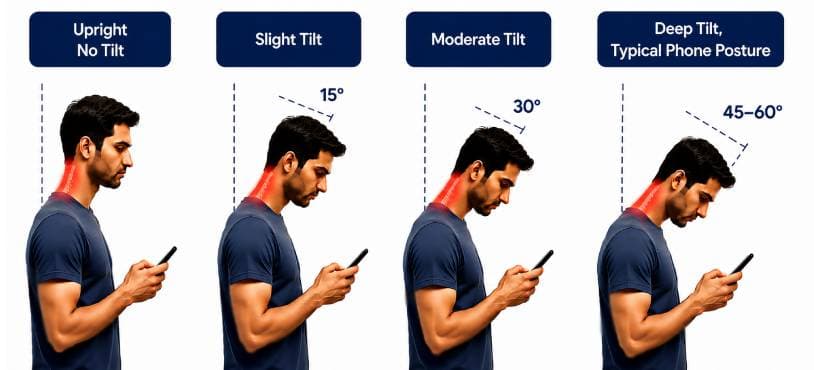
| Head Tilt While Looking Down | Approximate Angle | Approximate Load on the Neck |
|---|---|---|
| Upright, no tilt | 0° | 5 kg |
| Slight tilt | 15° | About 12 kg |
| Moderate tilt | 30° | About 18 kg |
| Deep tilt, typical phone posture | 45–60° | About 22 to 27 kg |
You don't feel any of this while it's happening. That is what makes tech neck sneaky. The damage builds slowly over months unnoticed until symptoms appear.
Why This Is Showing Up Early Now
Screen time is the main reason. There are many reasons for this.
Young adults use more than one screen. A laptop for school or work. A phone during breaks, then the phone before bed. Their neck never gets a chance to relax. The same poor position stays for hours, day after day.
Sleeping habits also play an important role. Many people scroll their phones in bed. They lie on one side with the neck bent at an angle. They prop the phone up on a pillow while tilting their chin toward their chest. Both positions put stress on the neck.
There is also physical activity now. Fewer walks. Fewer breaks. More time sitting in one spot, which is the same pattern behind back pain from a work-from-home desk setup. When your neck muscles stay still long they get tight and stiff, just like any other muscle.
Do this several times and the head starts to sit forward of the shoulders instead of directly above them. This is called forward head posture. Once that becomes normal for standing and sitting the pain doesn't stop. It follows you everywhere.
Early Signs Worth Catching
Tech neck does not usually start with pain. It begins with signs that many ignore.
Common early warning signs include:
- An ache at the base of the neck by evening, especially after a day full of screen time
- Shoulders and upper back that stay tight no matter how much you move
- Headaches that start at the back of the head and rise upward
- A stiff clicking sound when turning your head to one side
- Tingling or heaviness spreading into your arm or fingers
- Needing to roll or stretch your neck often just to feel comfortable
One or two of these may happen occasionally. If several keep coming back week after week it is time to take action. Neck pain is easier to fix when you catch it early. Waiting for a long time makes things worse.
Simple Fixes That Actually Work
“So am I supposed to stop using my phone?”
No. Nobody wants you to stop using your phone. What needs to change is how you hold the screen and how often you move.
Lift the phone up instead of dropping your head down. Keep it closer to eye level. It feels strange at first. Do it anyway. Just doing this takes away most of the strain on the neck.
For laptop work, raise the screen. Use a stand or a stack of books. Connect a keyboard. The top of the screen should sit at eye level or just below. Using a laptop flat on a table forces your neck into a downward tilt all day.
Take breaks more often than you think you need. A quick minute every half hour to look up and roll your shoulders helps more than one long stretch at night.
Watch what you do in bed. Lying flat with the phone held above your face is better for your neck than curling on your side. Reducing the scrolling time matters more than the position ever will.
Sleep also matters. A pillow that is too high is wrong because it pushes your head forward all night. A pillow that keeps the neck aligned with the spine is the correct choice.
A Daily Routine You Can Stick To
Exercises only help if you actually do them. This routine is short and easy to follow.
| Time of Day | What to Do |
|---|---|
| Every 30 minutes at work | Look up and roll the shoulders back five times |
| Mid-morning | Chin tucks, ten slow repetitions |
| Lunch break | Doorway chest stretch, hold for 30 seconds |
| Mid-afternoon | Gentle neck side stretch, 20 seconds each side |
| Evening | Upper back rolls and a short walk |
Two of these exercises are especially important.
Chin tucks are the core exercise for tech neck. Sit straight, look forward and gently pull your chin back without lifting or lowering it. You should feel a light pull at the base of your skull. Hold for a second, then let it go.
The doorway chest stretch is more helpful than most people think. Sitting hunched all day tightens the chest muscles. Tight chest muscles pull the shoulders forward, which pulls the head forward too. Stand in a doorway and place your forearms on the frame. Step forward slowly. You'll feel a stretch across your chest.
Nothing here should hurt. Mild tightness or stretch is okay. Sharp pain means stop and get it checked.
When to Get It Checked
For most people, tech neck improves within a few weeks when screen habits and movement routines change. Some signs mean you should see a professional rather than waiting.
Get it checked if:
- The pain has lasted more than three weeks even after adjusting your screen height and taking regular breaks
- The pain spreads to your shoulder blade, arm or hand
- Numbness, tingling or a weak grip are present
- Headaches come along with a stiff neck
- Pain wakes you at night, or your neck won't turn properly
A physiotherapy assessment checks how your neck moves, which muscles are tight and which ones are weak. This matters because two people with the same complaint may need completely different treatments.
The Vyana Approach
Tech neck is not a health threat. It can last for years if ignored. Raise the screen. Move often. Do chin tucks. These three steps solve most cases in young adults. Starting early makes the problem go away faster.
If pain keeps returning after trying everything, stop guessing and get expert guidance. Vyana Physiotherapy offers consultations. You get a plan based on your posture, screen habits and daily routine.