Neuro Physiotherapy: Rebuilding Movement After Stroke
By Dr. Sakshi Bhatia, Physiotherapist, Vyana Care
Think about how many times a day you just reach for something. A cup, your phone, a doorknob. You do not even think about it once. Now imagine waking up one morning. Your arm just will not lift. Your leg feels like it belongs to someone. That is a stroke. A stroke does not send a warning text first.
There are families who describe those few days as a total blur. Fear, confusion and having too many questions and not enough answers. But here is something that actually helps once the initial shock settles a bit: the brain can heal in ways that surprise doctors sometimes. A lot of that healing happens through something called neuro physiotherapy.
So what is neuro physiotherapy exactly? In words it is therapy designed for people whose movement problems come from the brain or nervous system, not a sprained ankle or a bad back. Stroke is probably the reason people end up needing it. Let us look at what it involves, how it helps someone move again after a stroke and what families can realistically do at home to help.
What Neuro Physiotherapy Actually Means
Here is a way to picture it. Your brain and your muscles are always talking to each other. The brain sends a signal, the leg moves. Easy.. After a stroke that conversation is cut off somewhere in the middle. The signal. Does not reach the muscles properly or it arrives scrambled.
Neuro physiotherapy does not fix the damaged part of the brain that is not how it works. What it does is help the brain carve out a path around the damage, kind of like finding another route when your usual road home is blocked. This process is called neuroplasticity. It is the whole reason recovery is even possible.
“Every man can, if he so desires, become the sculptor of his own brain.”
Depending on which part of the brain was hit a person might deal with weakness on one side, muscles, wobbly balance or trouble with small things like holding a spoon steady. Some also notice their affected arm feels heavier than usual almost like it is dragging behind the rest of the body.
None of this fixes itself in a week or two. It takes time. Repeating the movements over and over can feel boring or pointless but that repetition is actually doing something important behind the scenes. It is the brain slowly rewiring itself. Patience is needed here more than most people expect going in.
How It Actually Helps With Recovery
Stroke recovery is often described as a marathon and that is a way to put it. Nobody bounces back at that speed. It comes down to how severe the stroke was, which part of the brain was affected and how soon therapy starts.
Neuro physiotherapy usually focuses on:
- Restoring strength to the arm or leg
- Working on balance so walking and standing feel less risky
- Practicing everyday movements like sitting, standing and reaching
- Loosening muscles that have gone stiff or tight
- Helping with the fine hand movements needed day to day
Most doctors say starting early usually leads to better results. After a stroke the brain seems almost eager to relearn things actively searching for new routes to use.. That does not mean progress stops after a few months. Plenty of people keep improving past that point as long as they stay engaged. The NHS — guide to recovering from a stroke describes physiotherapy as a core part of that rehabilitation.
Recovery is not about the big wins like walking again. Smaller things matter too, holding a phone without dropping it or getting dressed without help. These small pieces add up to a sense of independence over time.
The Stages Recovery Usually Moves Through
Recovery tends to move in phases and what a therapist focuses on shifts a bit at each stage.
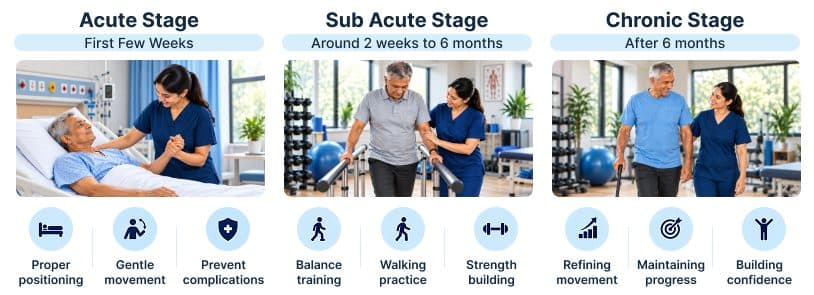
| Stage | When It Happens | What Therapy Looks Like |
|---|---|---|
| Acute Stage | couple of weeks | Careful positioning, small movements avoiding complications |
| Sub-Acute Stage | 2 weeks to about 6 months | Balance training, walking practice strength built through daily tasks |
| Chronic Stage | After 6 months | Holding onto gains tuning movement easing back into normal life |
Treat this as a rough guide, not a strict rulebook. Some people move through it quickly, some need time on one stage and both are completely fine. Every stroke is different. So is every recovery.
What a Session Might Actually Look Like
Neuro physiotherapists do not run the routine for every patient. They watch how a person moves, figure out what is hardest for them and build around that. A few things that come up a lot in sessions:
- Practicing tasks like standing up from a chair or grabbing a cup instead of random exercises for the sake of it
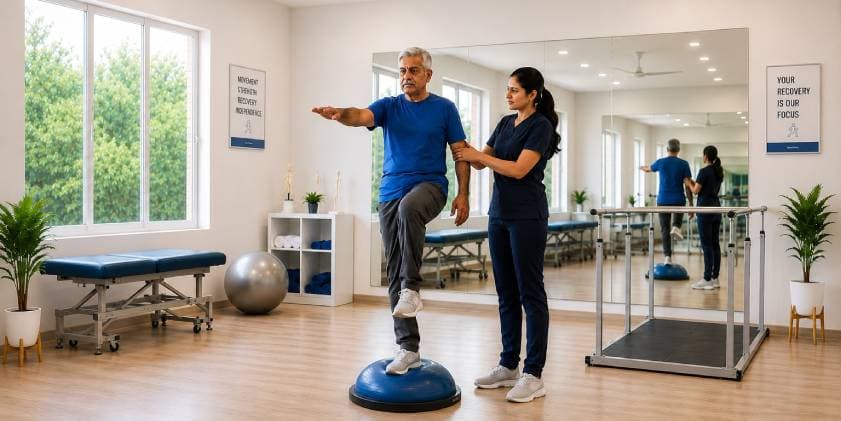
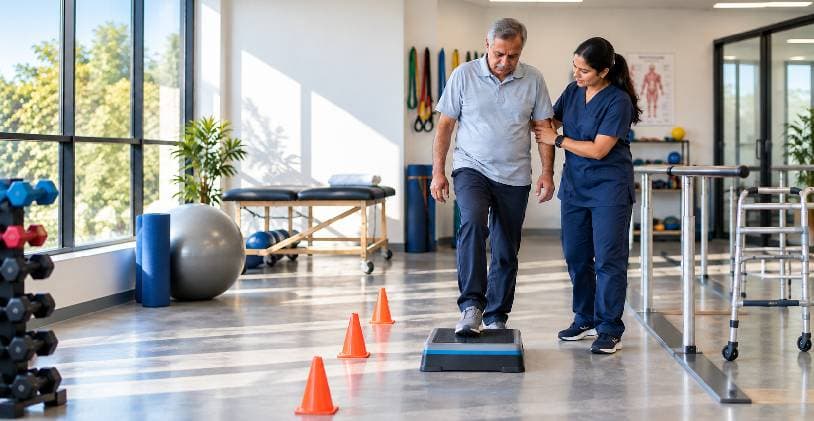
- Walking practice sometimes with support bars, a treadmill or a walker until balance gets more solid
- Balance work that slowly reduces the fear of falling and rebuilds a bit of confidence (see our guide to balance exercises for fall prevention)
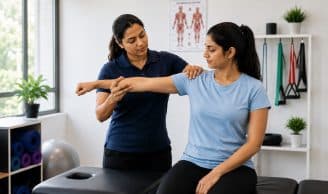
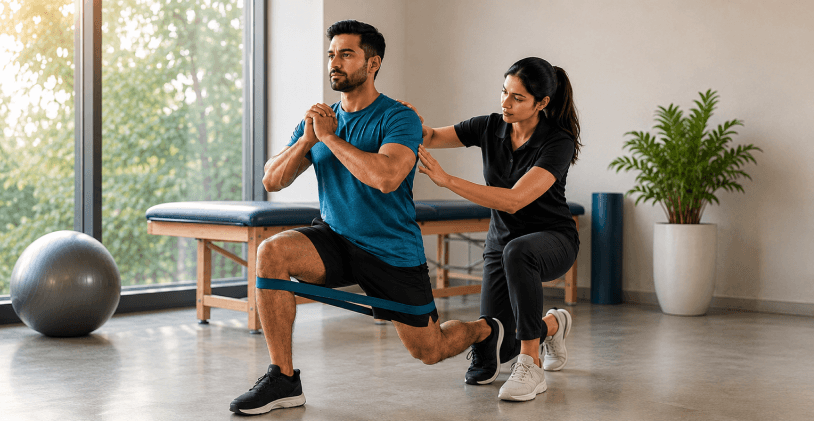
Therapists also add stretching for stiff parts and strengthening for the weaker side. What gets used depends on where the person is in their own recovery. There is no fixed formula honestly.
Why a Real Plan Matters More Than Time
A common mistake families make is assuming things will just sort themselves out with time.. That is not how the brain works. It needs direction, someone actively guiding it toward the movements again and again until it sticks.
A good rehab plan does not just focus on the arm or leg that is not cooperating. It looks at the person, their home, their routine, their mental state and what they actually want to get back to doing. Someone who loves cooking needs practice more than someone who just wants to climb the stairs safely again.
Here is something that tends to surprise people who consistently beats pushing really hard once in a while. Short regular sessions plus home practice usually win over one session every couple of weeks. If you are wondering about timelines, read how long physiotherapy takes to work.
What Families Can Actually Do at Home
Sessions with the therapist matter for sure.. What happens between those sessions matters just as much, sometimes even more. Families often play a role here than they realize.
| At Home | Why It Matters |
|---|---|
| Practicing the exercises the therapist gave every day | Keeps the brain actively relearning movement |
| Keeping the house clear of clutter. Hazards | Reduces the risk of falls while balance is still shaky |
| Noticing small wins and actually saying something | Keeps spirits up through a slow sometimes frustrating process |
Stay patient through all this. Recovery rarely moves in a line. Some weeks feel like progress, other weeks feel completely stuck. That does not mean nothing is happening. It usually just means the body needs a time to catch up.
It Is Not About the Body, Not Even Close
The emotional side of this journey often gets overlooked. Many stroke survivors feel frustrated, low or anxious as they adjust to a body that no longer moves the way it used to. A decent neuro physiotherapy plan takes that seriously. Moves at a pace that respects the person, not just the injury.
Open communication between the patient, family and therapist makes a difference. Small wins count for more than people expect. A finger that finally twitches after weeks of nothing or a few steps taken without support moments like that truly change how motivated someone feels to keep showing up the day.
The Vyana Approach
Getting movement back after a stroke is not fast. It is not easy.. It is possible and that is worth holding onto on rough days. Neuro physiotherapy gives the brain a way to relearn what it lost one small step at a time. At Vyana Physiotherapy stroke rehabilitation is built around the person in front of us, not a fixed checklist with real focus, on steady honest progress.