Plantar Fasciitis: Why Your Heel Hurts First Thing in the Morning
By Dr. Asma Multani, Physiotherapist, Vyana Care

When your foot hits the floor the pain shoots through your heel which is sharp, almost like a pin. You limp a little, walk it off, and by the fifth or sixth step it's mostly gone. Then tomorrow morning again it happens and you go through the whole thing again.
Sound familiar? This is plantar fasciitis, and it is honestly one of the most common foot complaints out there. Not exactly rare. Not exactly talked about enough either.
Here's the thing though. Most people just live with it for months. They tell themselves it was the shoes, or the extra walking yesterday, or nothing really. Sometimes that's true. But when the pain keeps coming back, at the same spot and at the same time of day, that's plantar fasciitis morning heel pain doing exactly what it does. It is worth figuring out and not ignoring.
What Is The Plantar Fascia
So there's this band of tissue under your foot. Thick, flat which runs from your heel all the way to your toes. That's the plantar fascia. It works like a bowstring, holding your arch up, taking the hit every time your foot lands.
It does a lot without you noticing. Every step. Every mile. Every hour standing at work on a hard floor. All of it wears on the fascia bit by bit. Push it too far and small tears show up in the tissue itself. Then it swells. Gets sore. And it hurts when it's been pressed.
That's plantar fasciitis, basically. And it shows up a lot in runners, people who stand all day for their job, people with flat feet, people with really high arches too, and anyone who's put on some weight recently.
Why Mornings Are Brutal
You sleep, your foot barely moves for hours. During that time the fascia tightens up, shortens a bit. Then morning comes. You stand. All that weight lands on a fascia that just spent the night getting tight. It has to stretch back out fast, and that's the sharp pain you feel.
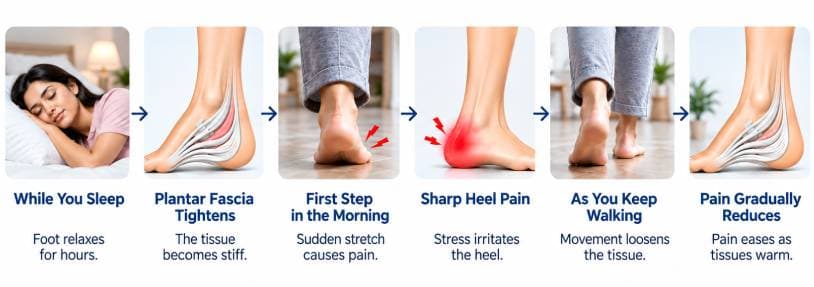
Not just mornings by the way. Long car ride, sitting through a movie, a few hours at a desk without moving. Stand up after that and you get a smaller version of the same thing. Doctors sometimes just call it first step pain. It makes sense why.
The tissue needs a minute. That's really all it is. A warm up before it can take your weight without complaining.
Good idea to know the plantar fasciitis symptoms early. Saves a lot of hassle down the line.
Signs To Watch For
- Sharp, sometimes burning pain under the heel. Worst during your first few steps
- Pain that fades once you're walking, comes back after sitting or standing a while
- Heel stiffness after a workout, even if it didn't hurt during the workout
- Some swelling or warmth around the heel, usually in cases that have dragged on
A couple of these showing up on repeat? Don't just push through it.
What Causes It
Almost never just one reason. Usually a few things pile up at once.
| Risk Factor | Why It Matters |
|---|---|
| Extra body weight | More pressure through the fascia with every step |
| Flat feet or very high arches | Changes how weight spreads across the foot |
| Tight calf muscles | Limits ankle movement, adds strain to the fascia |
| Long hours standing or walking | Common in teachers, nurses, retail staff |
| Old or unsupportive shoes | Doesn't give cushion to the heel or arch properly |
| Ramping up activity too fast | Common in runners who add mileage quickly |
Know these plantar fasciitis causes and small changes start making sense. Better shoes. A bit less weight. Things that actually move the needle. MedlinePlus (US National Library of Medicine): Heel injuries and disorders lists plantar fasciitis among the most common causes of heel pain, alongside overuse and poorly fitting shoes.
“The good physician treats the disease; the great physician treats the patient who has the disease.”
Getting It Diagnosed
Usually pretty simple. A physiotherapist or doctor presses around your heel, finds the sore spot, asks about your job and your shoes and how much you've been moving lately. That's often enough. Sometimes an X-ray or ultrasound gets ordered too, mainly just to rule out a stress fracture or heel spur. Not always necessary though, since plantar fasciitis is usually obvious from symptoms alone.
What Actually Helps
Good news first. Surgery almost never comes into this. Most people get better with simple and consistent care. Once you know your plantar fasciitis treatment options, it stops feeling like such a big deal.
- Stretching: Calf stretches, towel stretches, rolling your foot over a cold water bottle for a few minutes a day. Loosens things up more than you'd think.
- Better shoes: Real arch support, a cushioned heel, that takes pressure off. Insoles help too, store bought or custom made.
- Resting smart: Cut back on running or anything high impact for a bit. Swimming and cycling still work fine in the meantime.
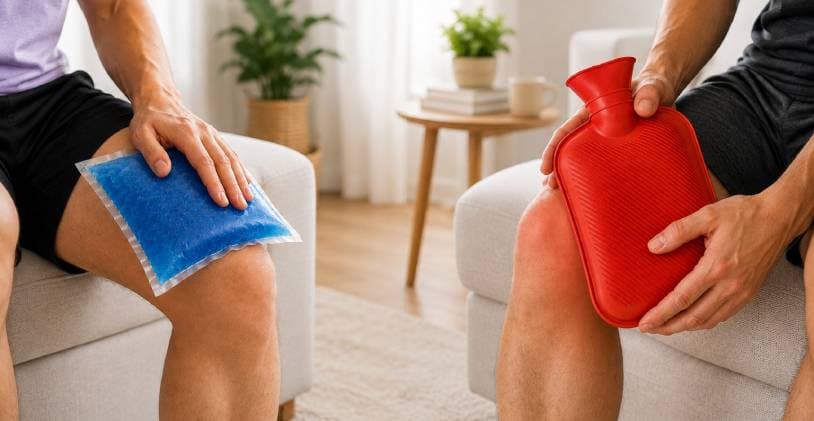
Not sure whether that water bottle should be cold or warm? Our guide on ice or heat, and which one you should actually use covers when each one earns its place.
Still stuck after that? A physiotherapist might bring in manual therapy, taping, a night splint, maybe shockwave therapy on top of your exercises.
Home Care Or See A Physiotherapist
Quick way to think about it.
| Your Situation | What To Do |
|---|---|
| Mild pain, just started, no swelling | Rest, ice, stretch, better shoes |
| Pain lasting more than two or three weeks | See a physiotherapist |
| Pain affecting your walking or work | Get it checked soon |
| No improvement despite home care | Book a physiotherapy evaluation |
If you do book in, it helps to know roughly what the timeline looks like. We've written about how long physiotherapy actually takes to work, and heel pain tends to follow the same pattern of steady, unglamorous progress.
Stopping It Before It Starts
Easier to prevent this than fix it once it's already flared up. Always.
- Wear cushioned and supportive shoes indoors and outdoors, especially on hard floors
- Stretch your calves and feet before you even get out of bed
- Keep your weight in a healthy range so your heels aren't under constant strain
The Vyana Approach
You don't need to just put up with heel pain every morning. Once you understand what plantar fasciitis actually is, and you stick with stretching, decent shoes, and the right care, most people walk normally again without even thinking about it. Been going on for weeks now? Getting in the way of your day? Get it looked at. Don't just wait around hoping it fixes itself.