Postpartum Recovery: Rebuilding Core and Pelvic Floor Strength Safely
By Dr. Sakshi Bhatia, Physiotherapist, Vyana Care

Maybe you sneeze and a little urine slips out. Or you catch your belly in the mirror one morning and it still looks a few months pregnant, weeks after the baby actually arrived. Or maybe it's just your lower back, sore again by the time evening comes around. If any of that sounds like your life right now, take a breath. Nothing here is broken, and you're nowhere near the only one going through it. Postpartum recovery, at the end of the day, is about giving your core and pelvic floor a real chance to heal, rather than just hoping it all sorts itself out with time.
So let's get into what's actually happening in your body after childbirth, what you can do about it safely, and when it makes more sense to see a physiotherapist than to keep guessing.
Why Nobody Really Explains This Part
Pregnancy changes your body in ways nothing quite prepares you for. Your belly muscles pull apart to make room for the baby. Your pelvic floor spends nine months holding up extra weight it was never really built for. By the time you actually deliver, none of that comes back the way it was before, not on its own anyway.
Most new mums just hear, "give it six weeks." And that's usually where the advice stops. Nobody tells you what to actually do during those six weeks, or once they're over. That gap is the real problem. Postpartum recovery isn't something that just switches on once a date passes on the calendar. It takes some real work, a bit like how a sprained ankle needs more than rest to properly get back to normal.
And honestly, this isn't only about how your belly looks afterward. It's about not throwing your back out every other week, keeping your bladder under control years down the line, and just feeling steady while you're hauling a baby around all day.
“Postpartum women should start by doing small amounts of physical activity, and gradually increase frequency, intensity and duration over time.”
Diastasis Recti and Pelvic Floor Weakness, In Plain Words
Two terms tend to come up a lot once people start talking about postpartum recovery, diastasis recti and pelvic floor weakness. Both are far more common than people think, and neither one means anything is permanently wrong with you.
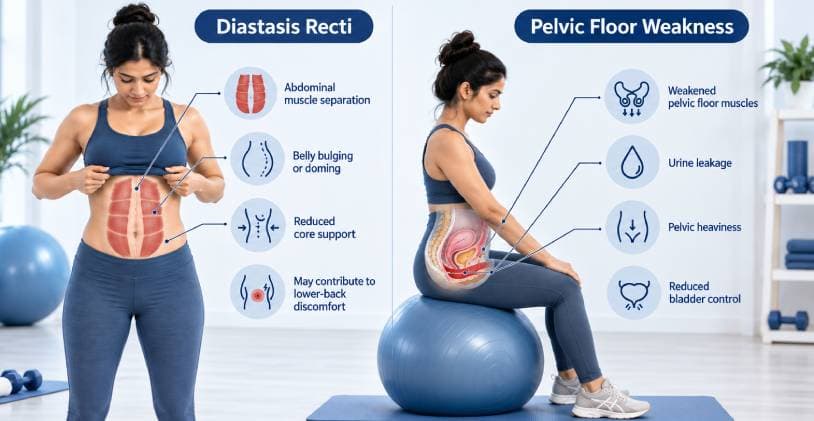
Start with diastasis recti. Basically, the two halves of your belly muscle separate along the middle to make space for the baby as it grows. Nearly every pregnant woman ends up with some version of this. For a good number of women, the gap closes back up naturally within a few months of delivery. For others, it just stays open, and that's usually what's behind the soft belly bulge people notice, along with the lower back pain that tags along with it. The fix, in most cases, is the right kind of core work, not any core work.
Then there's the pelvic floor. During pregnancy and birth, the muscles supporting your bladder and uterus get stretched, sometimes quite a bit, and they can come out the other side a fair bit weaker. That's usually the reason behind leaking a little urine when you laugh too hard, or a heavy, tired feeling low in the pelvis by the end of the day. The good news is, pelvic floor exercises actually work here, as long as they're done properly and built up over time instead of rushed. Mayo Clinic's how-to guide for Kegel exercises is a straightforward place to see how the basic squeeze is meant to feel.
| Condition | What You Might Notice | What Helps |
|---|---|---|
| Diastasis recti | Belly bulge, a dome shape when sitting up, lower back pain | Guided core exercises, breathing work, skipping crunches too soon |
| Pelvic floor weakness | Leaking urine, heaviness down below, weaker bladder control | Pelvic floor exercises, a physiotherapy check, slow strength building |
When It's Time to Stop Guessing
A bit of discomfort after having a baby is completely normal, nobody bounces back overnight. But a few things are worth getting checked properly instead of just waiting them out.
- You notice leaking, urine or gas, during everyday stuff like coughing or lifting your baby
- There's still a visible bulge or dome along your belly, months after delivery
- Your lower back, hip, or pelvic pain just refuses to settle down
If you're nodding along to even one of these, an actual physiotherapy check is going to get you further than another search at midnight for "exercises to fix postpartum belly."
Building Strength Back Up the Right Way
Here's something worth knowing before you go any further, jumping straight into crunches or a tough workout right after having a baby can actually make things worse, not better. Both diastasis recti and a weak pelvic floor need time and a slower approach. This is also exactly why prenatal yoga fits so naturally into this whole picture, the same gentle, breath-focused style that carried your body through pregnancy tends to work really well for healing after it too.
Recovery generally moves in stages, though of course, every body heals at its own speed.
| Recovery Stage | Rough Timeline | What to Focus On |
|---|---|---|
| Early healing | 0 to 6 weeks | Rest, gentle breathing, reconnecting with your pelvic floor |
| Building the base | 6 to 12 weeks | Pelvic floor exercises, light core work, short walks |
| Getting stronger | 3 to 6 months | Controlled core exercises, posture work, daily movement |
| Back to full activity | 6 months onward | Easing back into sport once cleared to do so |
A good place to actually begin is the breathing style taught in prenatal yoga, where your diaphragm and pelvic floor move together instead of separately. It sounds almost too small to matter, but it happens to be one of the safest ways to reconnect with your core once the baby's here. It fits neatly with our movement-first approach to recovery, and plenty of mums find it much easier to stay consistent with than some random workout plan they found online at 2 am.
Small Habits That Quietly Add Up
A few small things help too, alongside the actual exercises. Don't rest all your weight on one hip while carrying the baby, try to keep it even on both feet. And when you're doing something like getting up from a chair, breathe out instead of holding your breath. These aren't extra tasks or one more thing on your to-do list. Do them a few times and they just become normal, the way tying your shoelaces is normal.
The Vyana Approach
At Vyana Physiotherapy, we don't treat postpartum recovery as a quick fix or hand out the same printed sheet of exercises to everyone. A physiotherapist actually looks at how much diastasis recti is present, checks how the pelvic floor is holding up, and watches how you move day to day, before putting together something built for you specifically. If you're wondering how long physiotherapy takes to work, that honest answer comes out of the same assessment. It's also where our prenatal yoga sessions tie in naturally, the same gentle approach that got you through pregnancy keeps showing up to support you afterward too.