
Sciatica: Why It's Not Just a Back Problem, Causes, Red Flags, and Recovery Timeline
By Dr. Sakshi Bhatia, Physiotherapist, Vyana Care
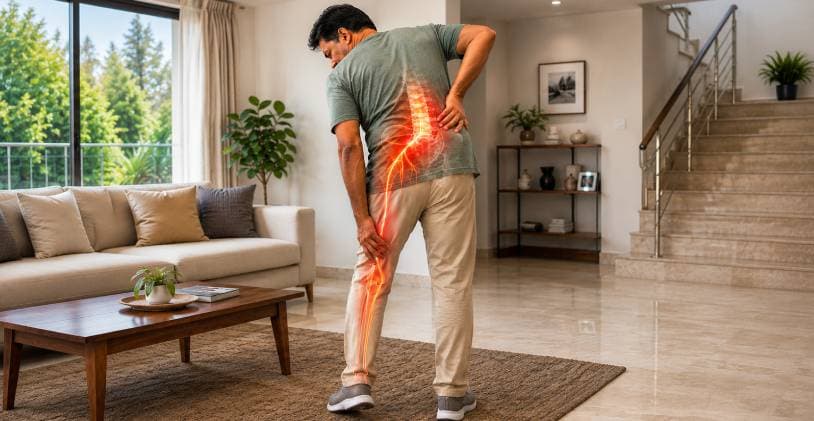
Say "sciatica" to someone and they picture a bad backache. Rest it, it'll pass, that kind of thing. Except it usually doesn't work that way. Sciatica is a nerve problem, not a muscle one, and the pain travels. Starts near the spine, ends up in the hip, the thigh, sometimes all the way down to the foot. Once you actually know what's causing yours, which signs mean don't wait, and roughly how long recovery takes, the right sciatica treatment stops feeling like guesswork.
What Is Sciatica, Really?
The sciatic nerve is the longest one you've got. Starts in the lower back, runs through the buttock, down the back of each leg. Squeeze or irritate it anywhere along that stretch, and the pain doesn't necessarily show up where the trouble started. Could be a burning pain in your calf while the real problem is sitting up near your spine, nowhere close. That's the whole reason sciatica pain gets brushed off or misread so often, and why people wait far too long before trying physiotherapy for sciatica. The NHS guide to sciatica describes the same pattern of pain spreading from the back into the leg and foot.
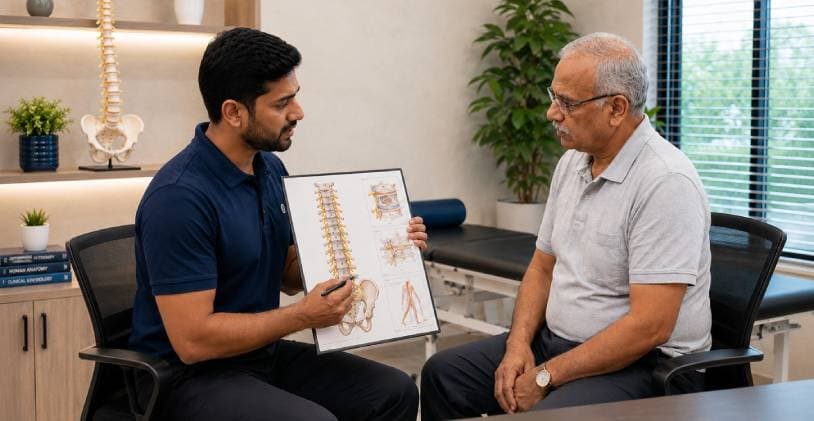
Why Sciatica Isn't Just a Back Problem
Yes, it usually starts in the lower back. But it doesn't act like a normal backache, it acts like a nerve issue running through your whole lower body. A disc can look completely fine on a scan and the nerve can still be under pressure. Same with tight hips. Same with just plain bad posture. None of it shows up until it does.
- A disc that's bulging, a canal that's narrowed, or a vertebra that's slipped can press right on the nerve root.
- A tight piriformis muscle in the buttock can squeeze the nerve all by itself, no disc involved at all.
- Sitting for long stretches, a weak core, slouching all day, none of it feels like much at the time, but it adds up. It's worth reading why posture isn't really about sitting straight.
Common Causes of Sciatica
| Cause | How It Affects the Nerve | Typical Age Group |
|---|---|---|
| Herniated disc | Presses right on the nerve root | 30 to 50 years |
| Spinal stenosis | Narrowed canal squeezes the nerves | 50 years and above |
| Piriformis syndrome | Muscle spasm compresses the nerve | Any age, common in athletes |
| Degenerative disc disease | Wear and tear irritates the nerve | 40 years and above |
| Spondylolisthesis | Slipped vertebra narrows nerve space | 40 years and above |
Red Flags: When Sciatica Needs Urgent Attention
Most sciatica settles down on its own with proper care. Give it time, do the exercises, it improves. But there's a short list of symptoms where waiting isn't the move, and a doctor needs to see you sooner rather than later.
- You suddenly lose control of your bladder or bowel
- There's numbness around the groin or inner thigh, doctors call this saddle anesthesia
- Your leg keeps getting weaker, to the point walking or standing is hard
- The pain started right after a fall, accident, or injury, and it's severe
- You've got a fever along with the back pain
How Long Does Sciatica Take to Heal?
There isn't one answer here. Depends on what's causing it, how squeezed the nerve is, how quickly you start treatment. But the numbers are on your side. Roughly 80 to 90 out of every 100 people with sciatica get better without needing surgery, as long as they stay consistent with physiotherapy for sciatica. If you want a broader sense of timelines, here's how long physiotherapy usually takes to work.
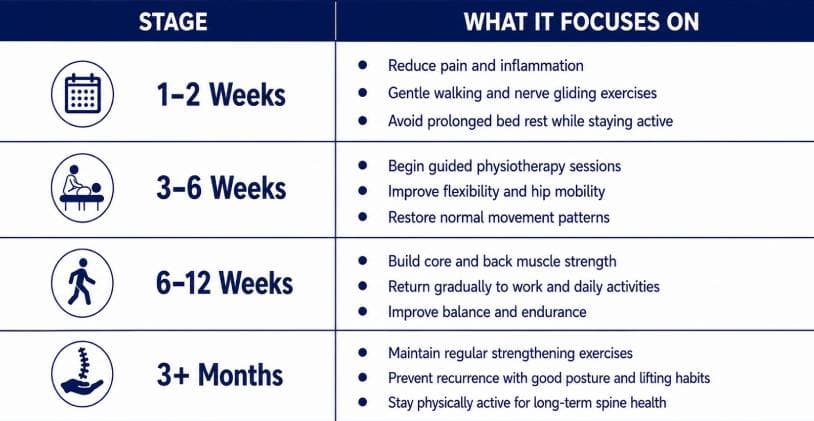
What Actually Helps Recovery
No single exercise fixes sciatica by itself. It's usually a mix, and which mix works depends on what's actually causing your pain.
- Nerve gliding exercises help the sciatic nerve move more freely instead of getting stuck in the tissue around it
- Strengthening the core and hips takes weight off the lower spine
- Postural work and hands-on therapy sort out sitting habits and loosen whatever's tight and pressing on the nerve
“If exercise could be packaged into a pill, it would be the single most widely prescribed and beneficial medicine in the nation.”
The Vyana Approach
At Vyana Physiotherapy, we don't just try to make the pain go away for a while. We look for what's actually behind it, could be a disc, could be a muscle, could just be years of the same posture habit. Then we build treatment around that, so it doesn't just feel better for a week and come right back.