Training After 40? Here's What Actually Changes
By Dr. Sakshi Bhatia, Physiotherapist, Vyana Care

We see this a lot in the clinic. Someone turns 48. They do the same workout they've done for years. The next day, their knees just will not cooperate. Nothing about the session was different. Same weight, same reps, same warm up they've always half done. So why now, when they were doing this exact thing five years ago with no trouble at all?
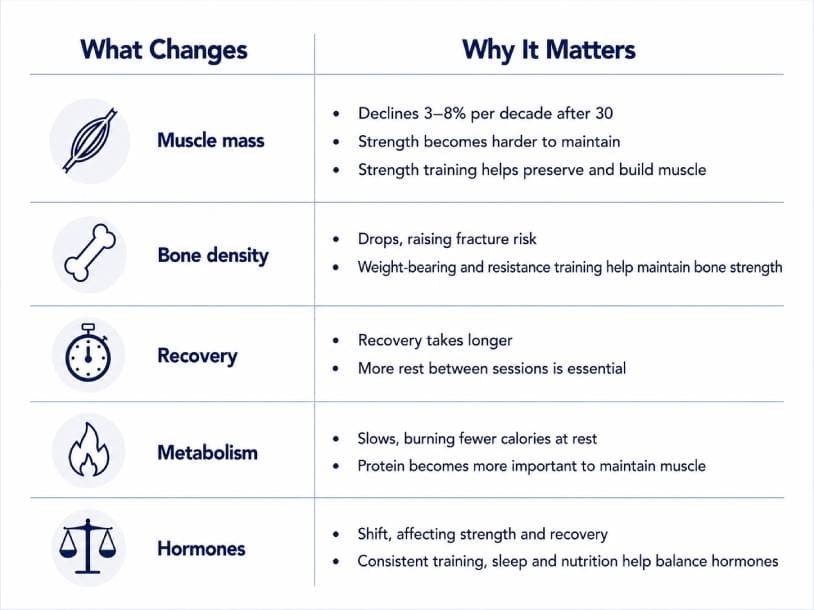
Age works quietly in the background. Muscle does not stick around the way it used to. Joints get pickier about what they will put up with. And recovery, which you barely thought about in your 20s, starts taking longer. You do not have to throw out your whole training plan for this. A few small changes, made now, will save you a lot of trouble later.
The tricky part is that most people do not notice any of this happening until something forces them to. There is no single moment where your body sends a memo saying things have changed. It shows up slowly, in small ways, until one ordinary workout suddenly does not feel ordinary anymore, and you're left wondering what changed when really, nothing did except time.
- Holding onto muscle gets harder
- Joints become more sensitive to strain
- Recovery takes longer than it used to
- Pushing through pain backfires more often
What Is Really Going On in Your Body
Here is the part most people do not know. Muscle loss actually starts around 30, not 40 or 50. It is called sarcopenia, and for a good stretch of years you will not notice it at all, because the body hides it well. What actually slows it down is staying active, particularly with some kind of resistance work mixed in with your cardio. The World Health Organization physical activity guidelines say much the same thing: muscle-strengthening work on two or more days a week, for every adult, alongside the usual cardio.
This is not something to panic about. It happens to almost everyone, at roughly the same rate. And honestly, genetics is not usually why one 65 year old is still strong and another is not. Most of the time it just comes down to whether they kept training, and whether that training suited their body, year after year, instead of following whatever plan happened to be popular.
Why the Old Routine Stops Working
A routine that felt fine at 25 can turn into a real problem by 45. Hard cardio every day. Lifting heavy with barely a warm up. Weeks without a single rest day. None of it felt risky at the time, because it never had before. Then one day it catches up. The good part is you don't need to start over. A few smarter habits, and things usually turn around.
- An ache that just will not quit
- A joint that suddenly flares up for no clear reason
- Soreness that lingers a few days longer than it used to
- Small niggles that quietly turn into bigger problems
“If exercise could be packaged in a pill, it would be the single most widely prescribed and beneficial medicine in the nation.”
Where to Actually Put Your Effort
You cannot really skip strength training after 40. And no, it is not about lifting heavier than you did at 25. Chase that number now and you'll probably end up hurt, not stronger. What works instead is simple: show up week after week, let your body actually recover, and remember the goal is moving well at 60, not how you look next month. That shift in mindset alone changes how people train, usually for the better, and it sits at the heart of our movement-first approach to physiotherapy.
- Get in 2 to 4 strength sessions a week. Squats, rows, presses, and deadlifts cover the basics
- Joints acting up? Swap in swimming, cycling, or a resistance band that day
- Soreness sticking around a day or two longer than usual is fine, not a red flag
- Do not skip mobility work. It is what keeps stairs and everyday bending from becoming a chore
- Eat enough protein, drink enough water, and actually take your rest days instead of feeling guilty about them
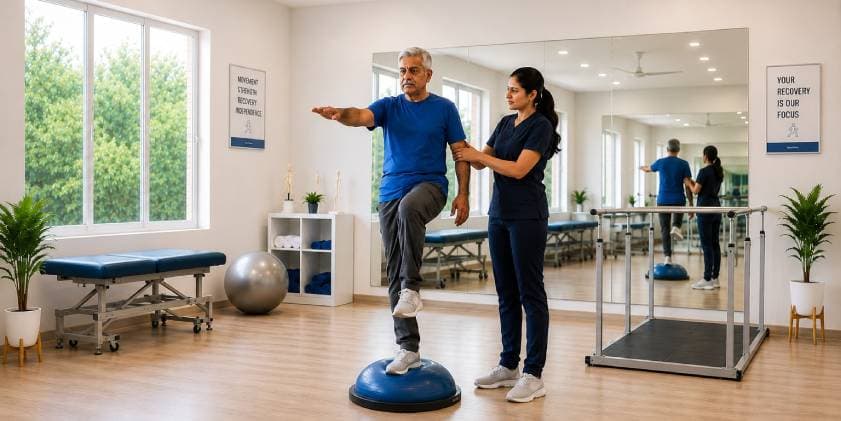
One more thing worth adding to the mix, especially past 40: a little balance work. It takes a couple of minutes, it protects the joints you are busy strengthening, and the simple balance exercises we use for fall prevention fit neatly into the end of a strength session.
Under 30 vs. Over 40, Side by Side
| Factor | Under 30 | Over 40 |
|---|---|---|
| Workout frequency | Can often handle daily high intensity sessions | Does better with built in recovery days |
| Recovery time | Usually 24 to 48 hours between sessions | Often needs 48 to 72 hours between sessions |
| Injury risk | Generally lower, heals faster | A bit higher, heals more slowly |
| Training priority | Chasing peak performance | Holding onto strength, function, and mobility |
| Warm up duration | A short one usually does the job | Needs to be longer to actually protect the joints |
Lifting weights past 40 is honestly still one of the safer things you can do for your body. Patience is the real challenge here, not effort. Add a little more weight one week, maybe an extra rep the next, and spread that progress out over a month or two. Connective tissue simply does not keep pace with muscle this early into a program. Good form and real recovery do more for your knees and shoulders than gritting your teeth ever will.
Mistakes That Keep Showing Up
We see two patterns over and over in our clinic. Some people get scared of getting hurt, so they stop pushing themselves at all, and slowly lose the muscle they were trying to protect. Others do the opposite. They train like they're still 22, then wonder why they keep getting hurt. Neither works well. Somewhere in the middle is the answer: listen to your body, adjust as you go, and stop treating a written plan like a rule you can't break.
- Avoiding all challenge out of fear of injury
- Training at 22 year old intensity with a 40 plus recovery clock
- Dropping strength work entirely in favor of cardio
- Following a rigid plan instead of listening to the body
The fix is the same for both. Start from where you actually are, not where you think you should be. Go slow, pay attention to how your body reacts, and let that guide your next move, not some plan you wrote months ago.
The Vyana Approach
Forty is not a finish line. If anything, this is the point where training smart starts to matter more than training hard. Your body can still get stronger and still adapt. It just asks for a little more patience than it used to.
At Vyana Care, we build our approach around movement that supports recovery, physiotherapy grounded in evidence, and care that starts with where you actually are right now, not a program built for somebody else's body. That's really the whole idea. Meet your body where it is today, and build from there.