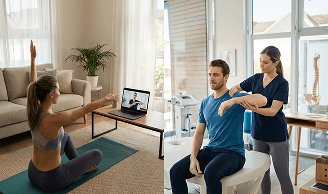
What to Expect in Your First Virtual Physiotherapy Session with Vyana
By Dr. Asma Multani, Physiotherapist, Vyana Care
So you have booked your first virtual physiotherapy session. Now you are probably wondering what happens next. Most of us think of physiotherapy as a room with a table, maybe some equipment in the corner, not something you do over a video call. If that feels a little odd right now, do not worry, plenty of people feel exactly the same way before their first call.
Here is the thing though. Once you take away the screen, the process barely changes. Someone asks about your history, watches how you move, and builds a plan just for you. Really, the camera is the only thing that is different. The questions, the care, and the attention all stay exactly the same.
Why Virtual Physiotherapy Works So Well for International Patients
Say you are based in the US, the UK, Canada, or the UAE. Finding a physiotherapist close to home is not always easy. You end up waiting weeks just to get an appointment, there are barely any specialists nearby, and then you still have to drive across town for a session that barely lasts half an hour. Virtual physiotherapy skips all of that. You still get real one on one time, just from home, at a time that actually works for you.
This kind of care works well for chronic pain, later stage recovery after surgery, or the stiffness you get from sitting at a desk all day. It will not replace hands on treatment for everything, especially in the early days after a serious injury. But for movement work and guided exercise, it holds up just fine, as long as your physiotherapist knows what they are doing and pays close attention to how you move. The NHS guide to physiotherapy notes the same thing, plenty of physiotherapists now run telephone or video appointments alongside in person care.
Before Your First Session: What You Actually Need
Good news here. You really do not need much. No gym membership, no fancy gear, nothing complicated. Just your own body, and whatever happens to already be lying around the house.
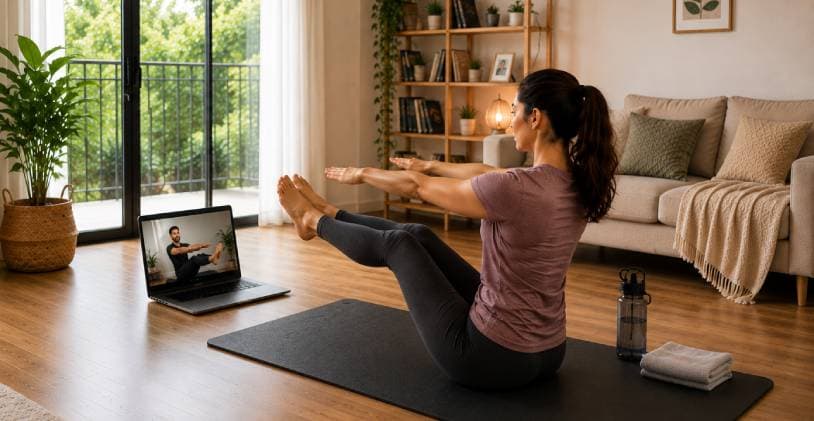
Any phone, tablet, or laptop with a working camera does the job, as long as the internet holds up. Clear a small patch of floor, about the size of a yoga mat, somewhere with decent light so your therapist can actually see you move. Wear clothes that let your joints move freely, leggings or shorts work better than stiff jeans. It also helps to think through your pain a little before the call. When did it begin, what tends to make it worse, and what do you actually want to get back to doing.
Honestly, that covers it. Nothing complicated, no long list to work through. Keep a chair nearby too, some sessions use it for balance or a bit of support. If you have pets or kids running around, try picking a quieter stretch of the day so nobody walks in halfway through an exercise. A quick word to the rest of the household beforehand usually sorts that out.
During the Session: What Actually Happens
Your first session usually lasts somewhere between thirty and forty five minutes. There is a loose order to how it goes, starting with a conversation and ending with you actually moving around in front of the camera.
It starts with a chat about your history. Your physiotherapist will ask about your pain, any old injuries, and what your day to day life looks like. From there, you will do a movement check. This simply means moving in front of the camera so they can see your posture and how far you can move in different directions.
After that, they will explain what is actually going on with your body, in plain words rather than confusing medical terms. They will also walk you through what getting better could look like over the coming weeks. Then comes your plan, built around your case specifically, not something generic pulled from a template. Finally, you will try a few exercises while they correct your form as you go, right there in the moment, rather than waiting until later to point out mistakes.
That last part matters more than people think. A small correction in the moment beats doing an exercise wrong for two weeks without realizing it. That is really the whole point of doing this live instead of just watching a pre made video and hoping you are doing it right.
“The camera does not weaken the assessment. What matters is whether someone is actually watching how you move and correcting it in the moment. That is what changes outcomes, not the room you are standing in.”
What Happens After Your First Session
Closing the laptop does not mean you are done. You will walk away with something written down, how often to do your exercises, and roughly what progress should look like over the next stretch of time.
Before the session, getting your space, device, and pain history ready takes about five to ten minutes. The session itself runs thirty to forty five minutes and covers the chat, the movement check, the explanation, and your first exercises. After that, the work keeps going, with your plan, regular check ins, and tracking how you are doing along the way. If you are wondering how many weeks that usually takes, we have written about how long physiotherapy takes to work in more detail.
Virtual Physiotherapy versus In Clinic Care: A Quick Comparison
People ask this a lot. Can virtual really replace an in person visit? Honestly, it really comes down to what you are dealing with.
| What matters | Virtual physiotherapy | In clinic care |
|---|---|---|
| Best suited for | Chronic pain, posture correction, later stage rehab, general mobility work | Fresh injuries, hands on manual therapy, the early days right after surgery |
| Convenience | No travel, sessions fit around your own time zone | A trip every single time, plus the usual waiting room delays |
| Continuity of care | Usually the same physiotherapist through your whole recovery | Depends on who is available that day, so you may repeat your history |
| Equipment | Simple, mostly bodyweight, maybe a resistance band | Full setup on site, which matters for certain treatments |
A lot of people end up doing both anyway. They start in clinic right after an injury, then move to virtual once recovery becomes more about steady, guided exercise. That way you get hands on care exactly when you need it most, then flexible, ongoing follow up once the hardest part of healing is behind you. If you are still weighing the two, our breakdown of online versus in clinic physiotherapy goes deeper into where each one fits.
Common Worries Before a First Virtual Session
A few worries come up again and again before that first call, so let us talk about them honestly, one by one.
Feeling awkward on camera comes up a lot. Most people feel a bit self conscious moving around in front of a screen at first, almost like being watched while working out. That feeling does not last long though. Within a few minutes it starts to feel like a normal conversation, not a performance.
Space at home is another worry that comes up often. You do not need a big room for this. A cleared patch of floor about the size of a yoga mat covers almost every exercise you will be asked to do, even for full body movement checks.
Then there is the worry that virtual care will not feel personal. But it is still one physiotherapist watching you closely and adjusting your plan as you go, not a robot or an automated program. It is nothing like a pre recorded workout that you simply follow along to on your own, with nobody paying attention to whether your form is right.
There is also the question of whether the internet connection will hold up, or whether a bad camera angle will throw off the whole session. In practice, most sessions run fine on ordinary home internet, and your physiotherapist will usually guide you on where to place your device before things get started. If the connection drops for a moment, most platforms reconnect quickly, and your therapist can simply pick up right where you left off, without losing much time at all.
The Vyana Approach
At the end of the day, a first virtual physiotherapy session really just comes down to talking things through and moving a bit on camera. That is genuinely the whole of it. Once you know roughly how things unfold, it stops feeling odd and starts feeling like any other appointment on your calendar.
At Vyana, sessions stay one on one with the same certified physiotherapist through your entire recovery, not a new face every time you log on. If you are in the US, the UK, Canada, or the UAE and want proper guided care without the constant clinic runs, book a session that fits your time zone.